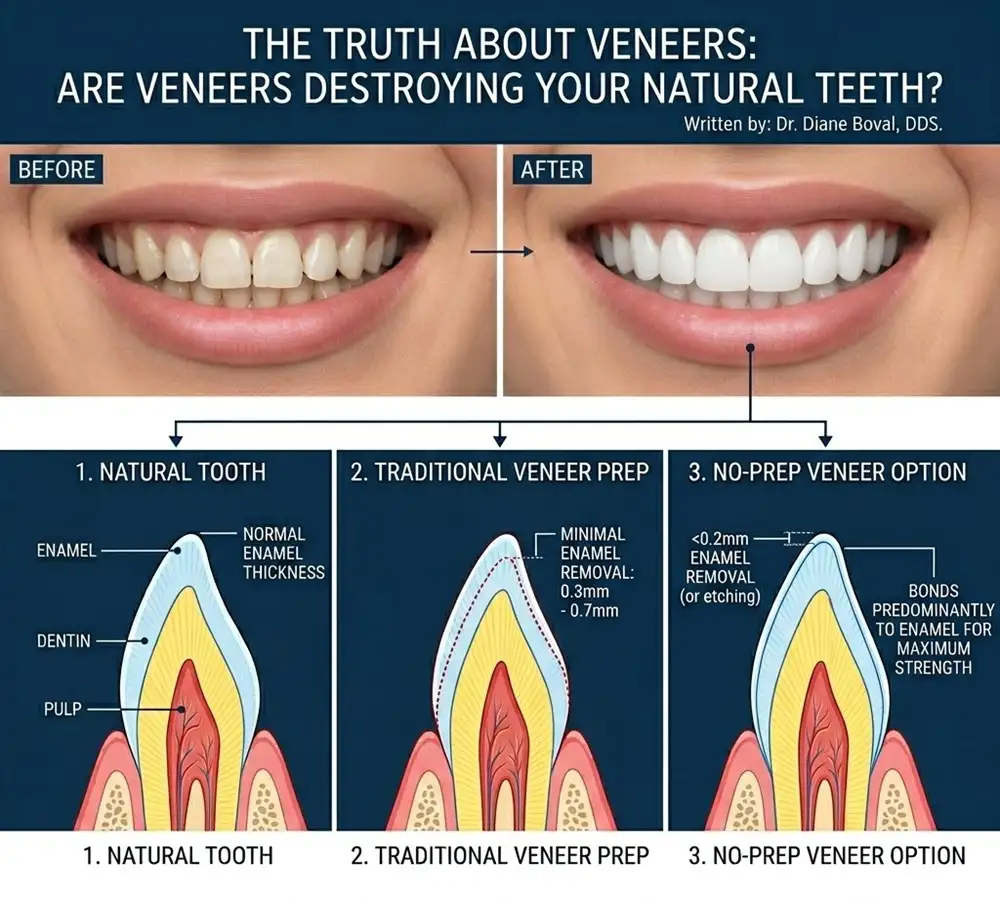
Dental veneers are one of the most discussed procedures in cosmetic dentistry. Some people view them as the fastest path to a beautiful smile, while others worry they permanently damage healthy teeth. The reality is more balanced. When veneers are planned carefully, placed by an experienced dentist, and bonded primarily to enamel, they can be a conservative and long-lasting solution for improving the appearance of front teeth.
This guide explains how dental veneers work, when they are appropriate, what the procedure involves, and what long-term care looks like. It also addresses the concerns patients often have about enamel removal, durability, pain, cost, and maintenance.
What Are Dental Veneers?
Dental veneers are thin shells designed to cover the front surface of teeth to improve color, shape, spacing, and symmetry. They are commonly used in cosmetic dentistry to correct visible imperfections in the smile zone.
Veneers are typically made from either porcelain or composite resin and are bonded to the enamel using adhesive dental cements. Once bonded, the veneer becomes part of the tooth structure and functions similarly to natural enamel.
Patients often consider veneers as part of a smile makeover, particularly when whitening alone cannot correct intrinsic stains or when teeth are worn, chipped, or uneven.
Common cosmetic concerns treated with veneers include:
- Discoloration that does not respond to whitening
- Minor gaps between teeth
- Worn or chipped edges
- Uneven tooth shape
- Mild alignment irregularities
Unlike crowns, veneers cover only the front surface of the tooth rather than the entire tooth.
Quick Comparison: Which Veneer Type is Right for You?
| Feature | Porcelain (Ceramic) | Composite Resin | No-Prep (Lumineers) |
|---|---|---|---|
| Durability | 10–15+ Years | 5–7 Years | 10–20 Years |
| Stain Resistance | High (Excellent) | Moderate (Can stain) | High (Excellent) |
| Enamel Removal | 0.5mm – 0.7mm | Minimal to None | None to 0.2mm |
| Natural Look | Best (Translucent) | Good | Excellent |
| Reversibility | No | Yes | Often Yes |
Why Dental Veneers Matter: Benefits and Possible Risks
Dental veneers provide both cosmetic and functional improvements when used in appropriate cases. However, like any dental procedure, they involve benefits and potential risks that patients should understand.
Benefits
Natural Appearance
Porcelain veneers mimic the translucency and light reflection of natural enamel. Modern ceramic materials can closely match the color and surface texture of surrounding teeth.
Conservative Tooth Preparation
Compared with dental crowns, veneers usually require less removal of natural tooth structure. This preservation of enamel is important because enamel provides the most predictable bonding surface.
Long-Term Durability
Studies of porcelain veneers have reported high survival rates over long follow-up periods. When bonded to enamel and maintained properly, veneers can remain functional and aesthetically stable for many years.
Smile Design Flexibility
Veneers allow dentists to adjust the length, width, and contour of teeth. This flexibility makes them useful for improving smile symmetry and proportions.
Stain Resistance
Ceramic veneers are resistant to staining from coffee, tea, and wine, making them more color stable than composite bonding.
Risks and Limitations
Although veneers are generally safe, patients should be aware of possible complications.
Tooth Sensitivity
Some patients experience temporary sensitivity after enamel preparation. This usually improves within a few days or weeks.
Chipping or Fracture
Ceramic veneers are strong but not indestructible. Habits like biting ice, opening packages with teeth, or grinding can increase fracture risk.
Debonding
In rare cases the veneer may detach from the tooth if bonding conditions were compromised or if excessive bite forces occur.
Irreversibility
If enamel is removed during preparation, the tooth will always require some form of restoration in the future.
Does Getting Veneers Hurt? What to Really Expect
One of the most common concerns is the pain factor.
During the preparation phase, dentists use local anesthesia so patients feel no discomfort while the enamel is being shaped. Most people describe the sensation as pressure rather than pain.
After the procedure, mild tooth sensitivity to hot or cold temperatures may occur for three to five days. This temporary sensitivity can usually be managed with common over-the-counter pain relievers.
For patients who feel anxious about dental treatment, many clinics offer sedation dentistry options that help make the entire smile makeover experience comfortable and stress-free.
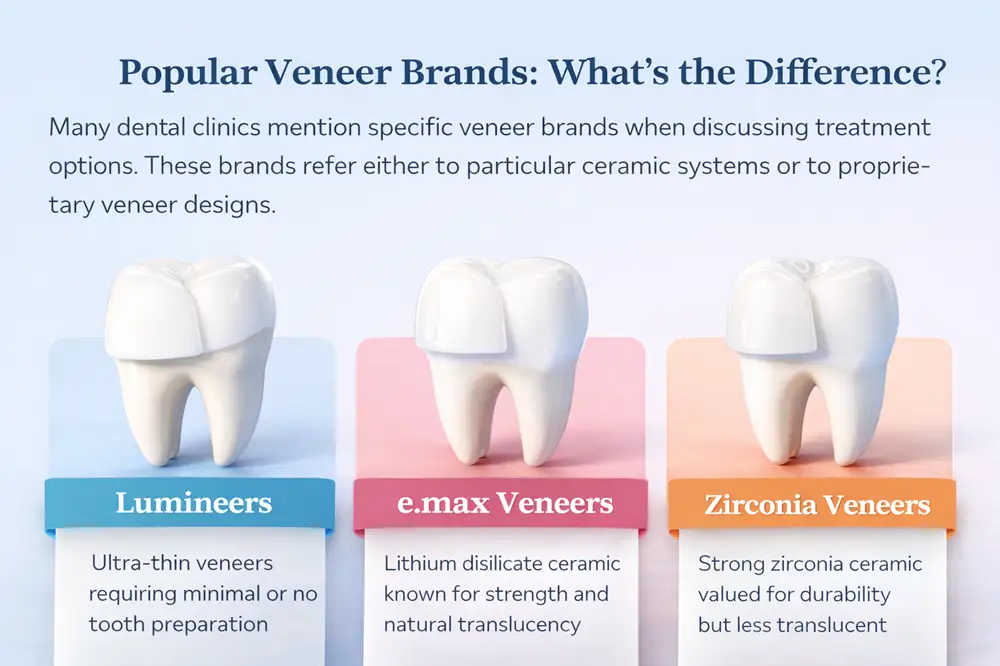
Popular Veneer Brands: What’s the Difference?
Many dental clinics mention specific veneer brands when discussing treatment options. These brands refer either to particular ceramic systems or to proprietary veneer designs.
Lumineers
Lumineers are marketed as ultra-thin veneers that often require little to no tooth preparation. They are designed to be placed directly over natural teeth without significant enamel removal. However, careful case selection is essential to prevent overly bulky results.
e.max Veneers
e.max veneers are made from lithium disilicate ceramic, a material known for strength and translucency. This system is widely used in cosmetic dentistry because it combines durability with natural aesthetics.
Zirconia Veneers
Zirconia is a very strong ceramic material used in various dental restorations. While zirconia veneers can be highly durable, they are typically less translucent than other ceramics, which may affect their appearance in highly aesthetic cases.
Each material has advantages depending on the clinical situation, enamel thickness, and cosmetic goals.
How the Veneer Procedure Works
Understanding the steps of veneer treatment helps patients know what to expect.
1. Consultation and Smile Evaluation
The dentist evaluates oral health, tooth structure, bite alignment, and cosmetic goals. Photographs, digital scans, or X-rays may be used to design the treatment plan.
Any existing dental issues such as decay or gum disease must be treated before cosmetic procedures begin.
2. Tooth Preparation
A small amount of enamel is reshaped to create space for the veneer. This ensures the final restoration fits naturally without appearing bulky.
The dentist then takes digital impressions or scans of the teeth.
3. Temporary Veneers
Temporary veneers may be placed while the final restorations are fabricated in a dental laboratory. These temporaries allow patients to preview the new shape and length.
4. Veneer Fabrication
Dental technicians create the veneers using ceramic materials that match the desired shade and translucency.
5. Bonding Appointment
At the final visit, the dentist checks fit, color, and alignment. The tooth surface is cleaned and conditioned, and the veneer is bonded using resin cement and a curing light.
Once bonded, the veneer becomes securely attached to the tooth.
Shade Selection: How Dentists Choose the Right Color
A common concern is that veneers may appear overly white or artificial.
Dentists avoid this outcome through careful shade selection. Several factors influence the final color:
- Natural tooth shade
- Skin tone
- Eye color
- Lip shape
- Age of the patient
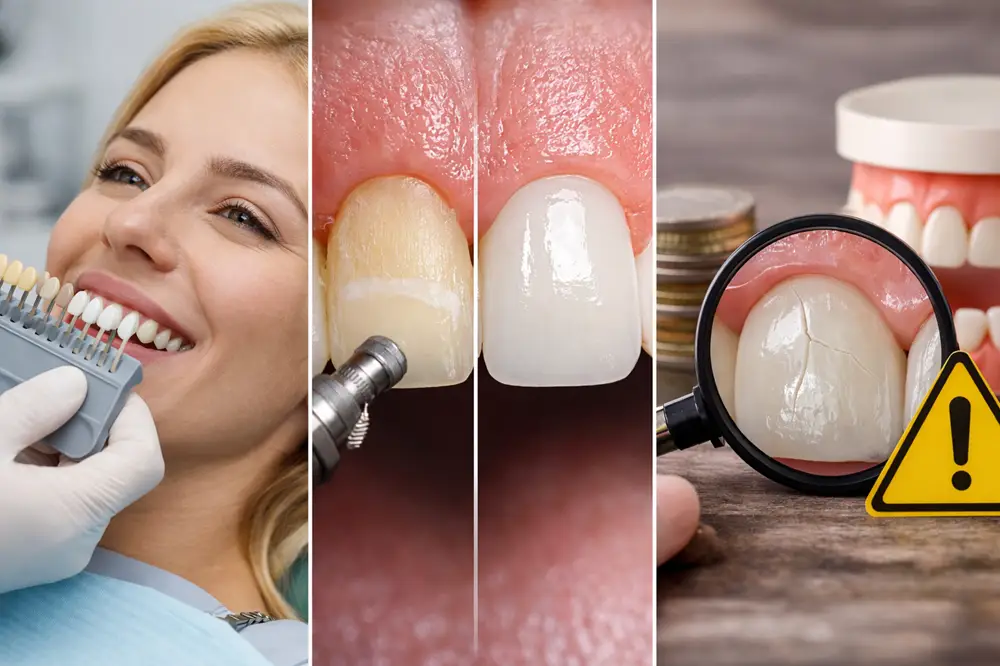
Dentists often use a shade guide to compare color options under natural lighting. In cosmetic dentistry, a slightly brighter shade is often selected for front teeth while maintaining natural translucency.
Digital smile design software can also simulate the final appearance before treatment begins.
What Your Dentist Might Not Tell You
Patients often hear only the positive aspects of veneers, but transparency is important.
Veneers May Need Replacement
Most veneers do not last forever. Many patients eventually replace them after a decade or more due to wear, fractures, or cosmetic changes.
Repairs Are Limited
Unlike dental bonding, which can often be repaired directly in the chair, a cracked porcelain veneer may require full replacement.
Gum Changes Can Affect Appearance
Over time, gum recession can expose veneer margins, making the edge more visible.
Color Cannot Be Changed Later
Once veneers are placed, they cannot be whitened. If surrounding teeth are whitened later, the veneers may need replacement to match.
Understanding these realities helps patients make informed decisions.
Special Situations: When Veneers Require Extra Planning
Certain situations require additional consideration before veneer placement.
Veneers for Smokers
Smoking can stain natural teeth and affect gum health. Although porcelain veneers resist staining, the surrounding teeth may darken, creating color mismatch over time.
Veneers for a Single Tooth
Matching one veneer to natural neighboring teeth can be challenging because natural teeth vary in translucency and texture. Skilled laboratory work is often required.
Veneers and Gum Recession
If gum recession occurs after veneer placement, the margins of the veneer may become visible. Proper oral hygiene and regular dental visits help reduce this risk.
Veneers vs Other Cosmetic Dentistry Options
Dental veneers are only one approach to improving a smile.
Veneers vs Dental Bonding
Dental bonding uses composite resin applied directly to the tooth. It is less expensive and faster than veneers but tends to stain and wear more quickly.
Veneers vs Orthodontics
Clear aligners or braces correct the position of teeth, while veneers mainly change their appearance. In some cases orthodontic treatment may be recommended before veneers.
Veneers vs Teeth Whitening
Whitening changes tooth color but cannot fix shape or alignment issues. Veneers provide a more comprehensive cosmetic solution when multiple factors are involved.
How Long Do Dental Veneers Last?
Longevity depends on several factors:
- Quality of bonding
- Amount of remaining enamel
- Bite forces
- Oral hygiene habits
- Material used
Many clinical studies report high survival rates for porcelain veneers when properly placed and maintained.
Regular dental checkups help detect small issues before they become larger problems.
Preparation and Aftercare Tips
Before veneers:
- Treat gum disease or cavities first
- Maintain good oral hygiene
- Discuss grinding habits with your dentist
After veneers:
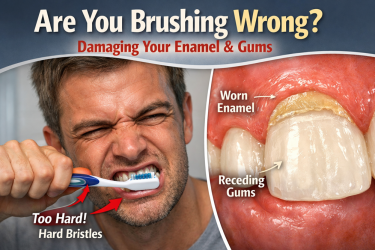
- Brush with a soft toothbrush
- Floss daily
- Avoid biting hard objects
- Wear a night guard if you grind your teeth
- Schedule regular dental visits
Proper care protects both veneers and natural enamel.
The Reality Check: A Lifelong Commitment
While veneers don’t “ruin” your teeth, it is vital to understand that the process (except for some no-prep options) is irreversible. Once the enamel is reshaped, that tooth will always require a restoration. Choosing veneers means committing to a maintenance cycle; you are not just buying a new smile, you are investing in a long-term relationship with your cosmetic dentist to ensure the margins remain healthy and the ceramic stays intact.
Final Thoughts
Dental veneers remain one of the most effective tools in cosmetic dentistry for improving smile aesthetics. When used in appropriate cases and placed with careful attention to enamel preservation and bite alignment, they can provide long-lasting and natural-looking results.
Patients considering veneers should consult an experienced dentist who can evaluate their oral health, discuss alternative treatments, and design a treatment plan that matches their long-term goals.
A thoughtful consultation is the best way to determine whether veneers are the right option for your smile.