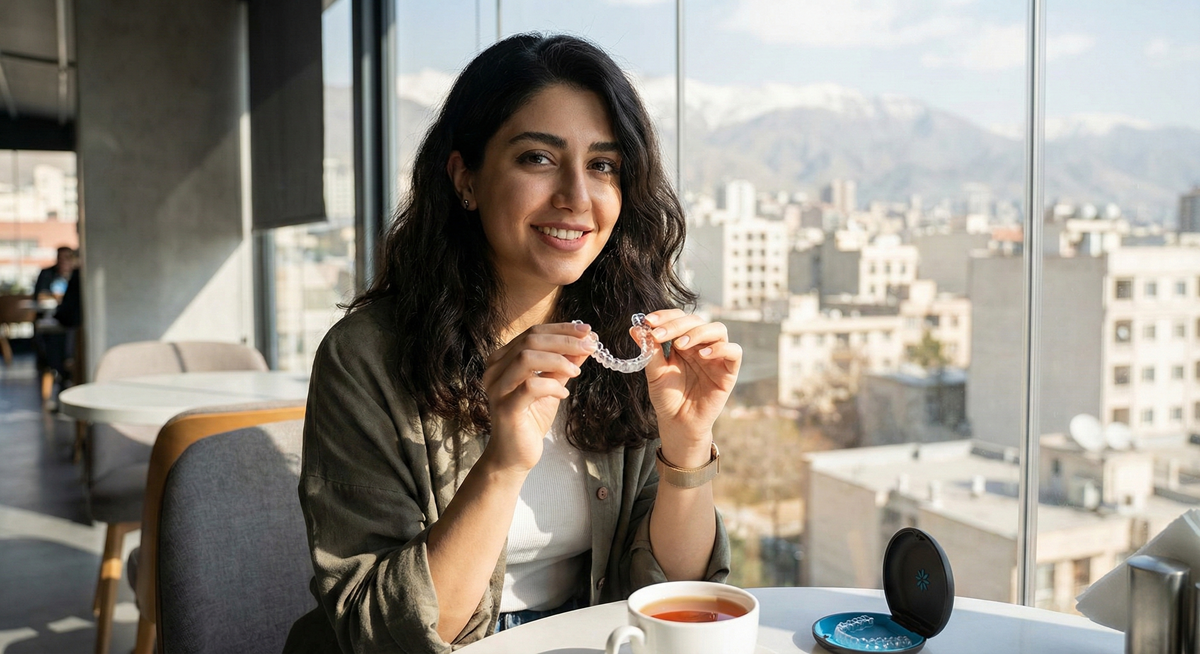
Invisalign vs Traditional Braces, which is right for me? is one of the most common questions patients ask when they want straighter teeth without guessing which option fits their life.
If you’ve searched for a dentist in CA or TX or typed “orthodontist near me” into Google, you’re likely comparing comfort, cost, appearance, and long-term results. At Gold Coast Dental, we provide both clear aligner therapy and fixed braces across California and Texas, and you can always find your nearest location to review your bite in person.
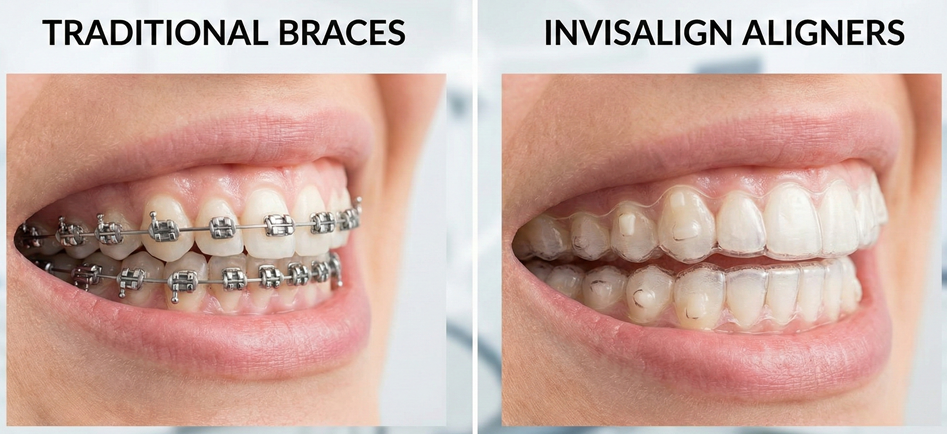
Quick Comparison: Clear Aligners vs Metal Braces
Short answer:
- Clear aligners are removable and discreet.
- Traditional braces offer stronger control for complex movement.
- Both usually take 12–24 months.
- Costs overlap depending on case difficulty.
| Feature | Clear Aligners | Traditional Braces |
|---|---|---|
| Visibility | Nearly invisible | Visible brackets |
| Removable | Yes | No |
| Best for | Mild–moderate cases | Moderate–severe cases |
| Hygiene | Easier | More challenging |
| Avg Cost (US) | $4,000–$7,500 | $3,000–$6,500 |
Both systems use controlled orthodontic force. The difference is how that force is delivered.
What Is Orthodontic Treatment and Why Does It Matter?
Orthodontic treatment gradually moves teeth into healthier alignment to correct crowding, spacing, overbite, underbite, and crossbite.
Straight teeth are not just cosmetic. Misalignment can increase plaque retention, uneven enamel wear, gum inflammation, and jaw strain. Your enamel acts like armor. When bite forces are uneven, that armor weakens faster.
How Invisalign and Traditional Braces Actually Move Teeth
Short answer: Both apply gentle, continuous force. Braces use wires. Aligners use custom plastic trays.
Clear Aligner Mechanics
- 3D-designed thermoplastic trays
- Each tray moves teeth about 0.25 mm
- Worn 20–22 hours daily
- Attachments improve rotation and torque
Braces Mechanics
- Brackets bonded to enamel
- Nickel-titanium archwires apply steady pressure
- Elastics guide bite correction
A 2015 systematic review found aligners effective for mild to moderate cases but less predictable for complex rotations (Rossini et al., 2015).
The Step-by-Step Invisalign Process: What You Experience
Most articles explain mechanics. Patients want experience.
1. Digital Scan (iTero)
We use iTero 3D digital scanning. No messy impression trays. The scanner captures a precise 3D model of your teeth within minutes.
Accuracy improves aligner tracking and comfort.
2. ClinCheck Smile Preview
Before treatment begins, you see a digital animation of your final smile using ClinCheck software. You can watch how teeth shift week by week.
This preview builds confidence and allows adjustments before trays are produced.
3. Attachment Placement & Tray Delivery
Small tooth-colored attachments may be bonded to improve grip. You receive multiple aligners and change them every 1–2 weeks.
4. Refinements
Most patients require refinement trays after the first series. These additional aligners fine-tune small movements.
This phase is normal and improves final precision.
Invisalign vs Braces: Which Works Better for Complex Cases?
Short answer: Traditional braces still provide stronger control for severe malocclusion.
Scientific limitations matter.
Cylindrical Teeth (Canines)
Rounded teeth are harder to rotate with aligners alone. Brackets offer stronger rotational control.
Extrusion Movements
Pulling a tooth downward from the gum is biomechanically easier with braces.
Existing Bridgework
If you have a dental bridge, aligners may not move splinted teeth effectively.
Honesty builds trust. Clear aligners are excellent, but not universal.
Daily Life with Aligners: Eating, Drinking & Habits
Short answer: Remove trays to eat. Drink only cold water while wearing them.
The Cold Water Rule
Hot beverages can warp plastic. Only cold water is safe while trays are in place.
Staining from Coffee or Wine
Coffee, tea, and red wine can stain trays. It won’t harm them, but it reduces clarity.
The “Invisalign Diet”
Because trays must be removed and teeth brushed before reinsertion, many patients reduce snacking.
It’s not marketed. It just happens.
Invisalign for Teens vs Adults
Short answer: Invisalign Teen includes compliance indicators and eruption tabs.
Teen treatment includes:
Blue Compliance Indicators
Small blue dots fade when aligners are worn consistently. If they don’t fade, wear time is low.
Parents appreciate accountability.
Eruption Tabs
Built-in space allows erupting molars to grow naturally.
For more details, visit our orthodontic services page.
Cleaning Aligners Properly
Short answer: Use mild antibacterial soap or Invisalign cleaning crystals. Avoid toothpaste.
Toothpaste scratches plastic and makes trays cloudy.
Clean daily using lukewarm water and gentle soap. Never use hot water.
Does Invisalign Affect Speech?
Some patients experience a mild lisp during the first few days.
The tongue adapts quickly. Most speech changes resolve within one week.
Treatment Duration
Mild cases: 6–12 months
Moderate cases: 12–24 months
Severe cases: 24+ months
Compliance affects speed.
Cost of Invisalign vs Braces
Costs vary by complexity and location.
- Clear aligners: $4,000–$7,500
- Metal braces: $3,000–$6,500
- Ceramic braces: $4,000–$8,000
Insurance may cover $1,000–$3,000. Payment plans are common.
Longevity & Retention
Without retainers, relapse rates can reach 30% (Little, 2016).
Retention is lifelong. Nightly retainer wear preserves results.
Final Thoughts
Choosing between aligners and braces depends on case complexity, lifestyle, and consistency. Both systems can straighten teeth safely when supervised by a licensed provider.
Gold Coast Dental has over 20 locations across California and Texas. You can check our locations page to find your nearest Gold Coast Dental location. If you’ve been searching for a dentist near me or orthodontic care in California, we’re ready to help.
You can book a session or call us now to schedule your consultation.
Last reviewed February 2026.