Porcelain vs. Composite Veneers: Which One Is Actually Worth Your Money? Patients ask this every week when they want a long-lasting smile upgrade without wasting thousands of dollars. First we need to answer:
What Are Dental Veneers?
Dental veneers are thin shells bonded to the front surface of teeth to improve color, shape, and alignment.
They are commonly used for:
- Permanent discoloration
- Chipped edges
- Small gaps
- Mild crooked teeth
- Enamel thinning
- Intrinsic stains whitening cannot remove
Veneers rely on adhesive bonding. Dentists gently prepare enamel (usually 0.3–0.7 mm), apply phosphoric acid etch (35–37%), place bonding resin, and cement the restoration. Bond strength to enamel often exceeds 20 MPa under clinical conditions.
If whitening treatments have failed, you may want to read more about professional teeth whitening options before deciding on veneers.
The Development of Veneers: From Cosmetic Trend to Clinical Standard
Modern veneers are evidence-based restorations with strong survival data.
- Porcelain survival rate: 91–96% at 10 years
- Ceramic veneers show over 85% survival at 15–20 years
- Composite veneers average 5–7 years before repair
That difference explains much of the price gap.
Porcelain vs. Composite Veneers: Core Differences
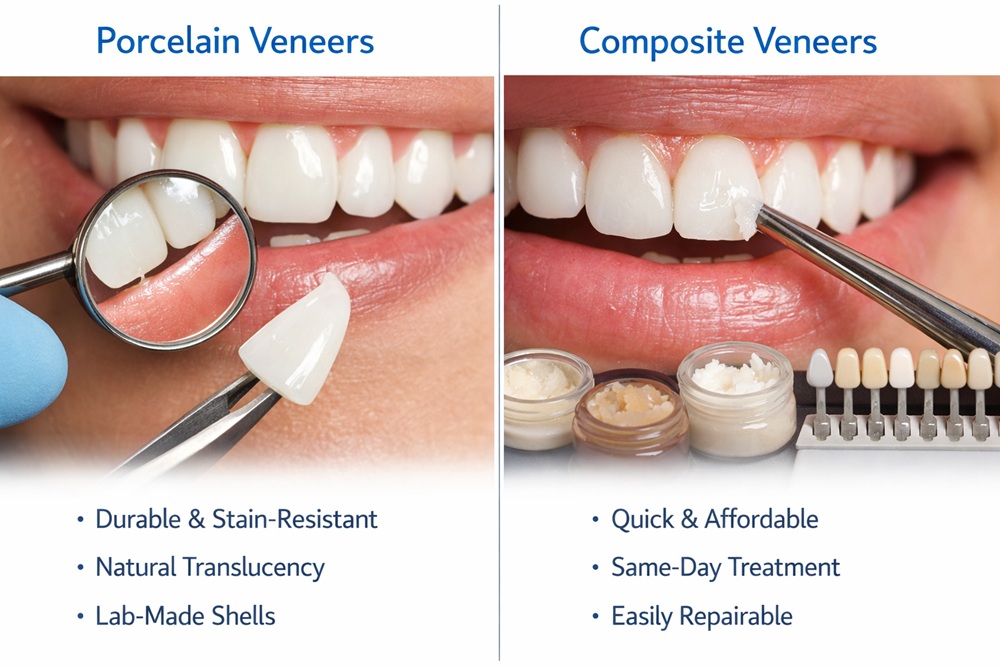
Porcelain vs. Composite Veneers differ in strength, stain resistance, fabrication, and lifespan.
Porcelain vs. Composite Veneers comparisons must consider material science and long-term performance.
Porcelain Veneers (Ceramic)
- Lab fabricated
- Highly stain resistant
- Natural translucency
- Longer lifespan
- Higher cost
Composite Veneers (Resin)
- Sculpted directly on tooth
- Lower upfront cost
- Easier repair
- More prone to staining
- Shorter lifespan
If you previously tried whitening teeth treatments and experienced shade relapse after whitening, porcelain may provide better long-term color stability.
The Role of E-max and Zirconia in Porcelain vs. Composite Veneers
Porcelain vs. Composite Veneers now includes advanced ceramics like lithium disilicate and zirconia.
E-max veneers benefits include:
- Flexural strength 360–400 MPa
- High translucency
- Conservative preparation
Zirconia veneers offer higher strength and are useful for masking dark teeth.
When NOT to Get Veneers: 5 Contraindications
Porcelain vs. Composite Veneers are not appropriate for everyone.
- Severe Bruxism – Heavy grinding increases fracture risk.
- Extremely Thin Enamel – Bonding requires enamel for durability.
- Active Gum Disease – Inflammation reduces aesthetic stability.
- Large Structural Damage – crowns may be more appropriate.
- Unrealistic Expectations – Veneers improve teeth, not skeletal alignment.
Veneers vs Whitening: When Bleaching Isn’t Enough
Teeth whitening works for surface stains. But intrinsic stains whitening may fail when dentin exposure after bleaching or enamel thinning yellow teeth are involved.
If you’re wondering whether do whitening strips work, they can help mild stains, but they often lead to faster teeth whitening relapse compared to in-office treatment.
If you’re still comparing teeth whitening and veneers, it helps to understand why color relapse happens in the first place. Many patients notice their teeth yellow after whitening because of enamel dehydration, dentin exposure, or staining habits.
We explain the science behind shade relapse and how to prevent it in our detailed guide on why teeth look yellow after whitening. Understanding this difference often clarifies whether bleaching or veneers makes more sense long term.
Read more : A Non-Invasive Solution for Stains, Chips, Cracks & Teeth Gaps
Veneers Procedure Steps: What to Expect
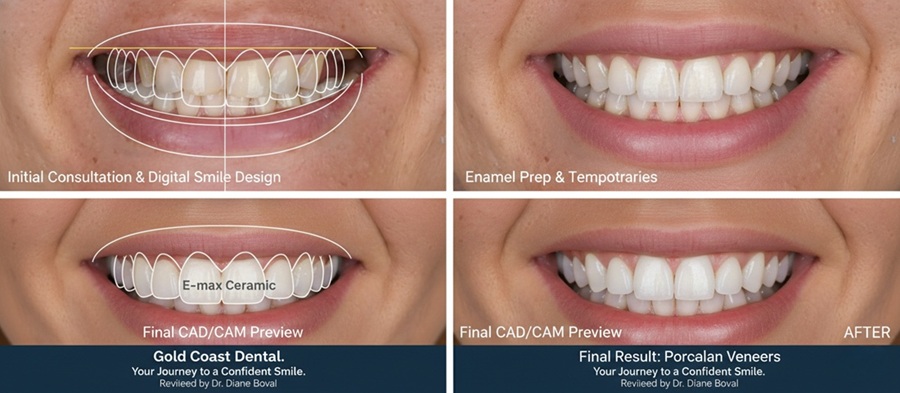
Porcelain requires 2–3 visits. Composite usually requires one.
- Consultation and digital smile design
- Minimal enamel preparation
- Temporary veneers (porcelain cases)
- Final bonding
Most patients report mild sensitivity for 1–3 days.
Treatment Timeline Comparison
| Step | Porcelain Veneers | Composite Veneers |
|---|---|---|
| Initial Consultation | ~1 Hour | ~1 Hour |
| Tooth Preparation | 1–2 Hours | Often Minimal |
| Lab Fabrication | 1–2 Weeks | Same Day |
| Final Bonding | 1–2 Hours | 1–2 Hours |
| Total Completion | 2–3 Visits | 1 Visit |
How Long Do Porcelain vs. Composite Veneers Last?
Porcelain vs. Composite Veneers show different durability profiles.
- Porcelain: 10–20 years
- Composite: 5–7 years
Longevity depends heavily on bite forces and maintenance.
Bruxism and uncontrolled bite forces significantly increase veneer failure risk.
One of the most overlooked clinical variables in veneer longevity is bruxism. While many cosmetic websites briefly mention grinding as a “risk factor,” peer-reviewed clinical data shows the impact is far more significant than most patients realize.
In a long-term clinical evaluation of porcelain laminate veneers, patients diagnosed with bruxism showed significantly higher complication rates. The study found that the likelihood of veneer debonding was nearly three times higher in patients with bruxism compared to non-bruxers. Even more concerning, patients who required an occlusal splint (night guard) but did not consistently use one demonstrated fracture risks reported up to eight times higher than compliant patients.
This is not a small statistical fluctuation. It changes the financial equation. When patients ask whether porcelain is “worth the money,” the correct clinical response is: it depends heavily on occlusal forces and protective compliance.
In other words, material choice matters — but occlusal stability and night guard use may matter more. For patients with active grinding habits, a properly designed occlusal scheme and consistent night guard wear are critical determinants of long-term veneer survival.
How Much Do Veneers Cost?
| Type | Average Cost Per Tooth | Lifespan |
|---|---|---|
| Composite | $250–$1,500 | 5–7 years |
| Porcelain | $1,000–$2,500 | 10–20 years |
If you are wondering “how much do veneers cost in California,” the average price per tooth starts from $1,000 for porcelain options at reputable clinics like Gold Coast Dental.
Veneer Maintenance: Protecting Your Investment
Porcelain vs. Composite Veneers last longer with proper care.
- Use non-abrasive fluoride toothpaste
- Avoid baking soda or abrasive pastes
- Floss daily
- Wear a night guard if needed
- Schedule regular cleanings
For patients concerned about long-term cosmetic stability, read more about cosmetic dentistry services offered at our clinics.
Long-term veneer success also depends on consistent preventive care. Regular hygiene visits help detect early gum changes that can affect veneer margins. If you want practical tips on maintaining strong enamel and healthy gums, review our guide on preventive dental care habits that support long-lasting cosmetic results.
The surface quality of composite veneers directly affects stain resistance and long-term appearance.
Whitening Toothpastes Can Alter Composite Surface Integrity and Increase Staining Risk
Another detail rarely discussed in consumer-level articles involves the interaction between whitening toothpastes and composite resin surfaces.
A peer-reviewed laboratory study evaluating different dentifrice formulations found that certain whitening toothpastes — particularly those with abrasive agents or peroxide components — significantly increased surface roughness in composite resin materials. Scanning electron microscopy (SEM) imaging revealed measurable microstructural surface alterations after repeated brushing cycles.
Why does this matter clinically?
Surface roughness directly correlates with plaque retention and stain accumulation. Even small increases in microroughness can reduce gloss retention and accelerate discoloration. This helps explain why some patients feel their composite veneers “yellow faster,” even when oral hygiene is acceptable.
The takeaway is practical: abrasive or baking soda–based toothpastes may compromise the polish layer of composite veneers over time. Non-abrasive, low-RDA fluoride toothpaste is strongly recommended to preserve surface integrity and color stability.
For porcelain veneers, this issue is less pronounced due to the glazed ceramic surface, but composite restorations are measurably more vulnerable to surface degradation from aggressive dentifrice formulations.
Veneers vs Crowns
Crowns cover the entire tooth. Veneers preserve more enamel. If structural damage exists, explore crowns and bridges as an alternative option.
Final Thoughts: Are Porcelain vs. Composite Veneers Worth It?
Porcelain vs. Composite Veneers ultimately depends on whether you prioritize longevity or lower upfront cost. Patients in Los Angeles, San Francisco, Houston, and surrounding communities often choose porcelain for durability, while others prefer composite for affordability.
Gold Coast Dental serves more than 19 locations across California and Texas. Whether you are searching for a Dentist in Los Angeles or veneers near me in Houston, you can check our locations page to find your nearest Gold Coast Dental location.
If you are ready to move forward, call us now (562) 242‑1411or book a session with a cosmetic provider.
Last reviewed February 2026.