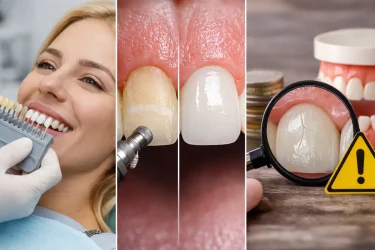
Teeth whitening is designed to brighten your smile, but many patients feel confused when they notice their teeth yellow after whitening just a few days later. If this happened to you, it does not automatically mean the treatment failed. In most cases, this is a predictable biological response called shade relapse.
if you recently searched for a Dentist near you, because your smile looked darker after treatment, you are not alone. Patients across California and Texas ask the same question. If you are considering professional treatment, you can learn more about our professional teeth whitening services or find your nearest location by visiting our locations page.
The “Dehydration Effect”: Why Teeth Yellow After Whitening Within 48 Hours
Teeth whitening temporarily removes water from enamel, which makes teeth appear brighter than their stable shade.
Bleaching gels containing hydrogen peroxide or carbamide peroxide penetrate enamel prisms and dentinal tubules. During this process:
- Water content decreases
- Light reflection changes
- Teeth appear extra bright immediately after treatment
As enamel rehydrates over 24–72 hours, the true shade settles. Studies published in the Journal of Dentistry show measurable color rebound during the first week due to rehydration rather than new staining.
If you’re unsure whether your result is normal rehydration or true discoloration, a quick exam during your routine general dental visit can clarify the cause.
5 Surprising Reasons Your Teeth Yellow After Whitening
1. The Rehydration Shift
The initial brightness fades slightly once enamel regains moisture. This is expected and usually mild.
2. The 24-Hour “Open Pore” Window
Right after bleaching, enamel becomes temporarily more permeable. Dark drinks or smoking during this phase increase pigment absorption.
3. Thin Enamel & Visible Dentin
Enamel thinning exposes the naturally yellow dentin underneath. Whitening cannot permanently change dentin’s baseline tone. In cases of significant enamel wear, restorative options like cosmetic dentistry treatments may provide more stable results.
4. Incorrect Post-Whitening Care
Drinking coffee, tea, red wine, or smoking shortly after treatment speeds up shade relapse.
5. Type of Whitening System Used
Professional teeth whitening uses higher hydrogen peroxide concentration (25–40%) compared to over-the-counter systems (6–10%). Lower concentrations often mean shallower stain oxidation and quicker relapse. You can compare options in detail on our teeth whitening treatment page.
Why Teeth Yellow After Whitening Even When You Follow Instructions
Teeth yellow after whitening sometimes despite perfect aftercare because intrinsic factors play a role.
These include:
- Genetic enamel thickness
- Age-related dentin darkening
- Previous dental trauma
- Internal staining from medications
Intrinsic stains whitening outcomes are more limited compared to extrinsic surface stains. In these cases, treatments such as dental veneers or bonding may offer better long-term aesthetic stability.
Sensitivity, Hydrogen Peroxide Concentration & Color Perception
Sensitivity after bleaching is linked to temporary dentinal tubule exposure, not permanent damage.
Higher hydrogen peroxide concentration produces deeper oxidation but may increase temporary sensitivity. Research in the British Dental Journal confirms that sensitivity peaks within 24 hours and resolves within 48 hours in most patients.
Interestingly, sensitivity can slightly alter how light reflects off enamel, affecting perceived shade temporarily.
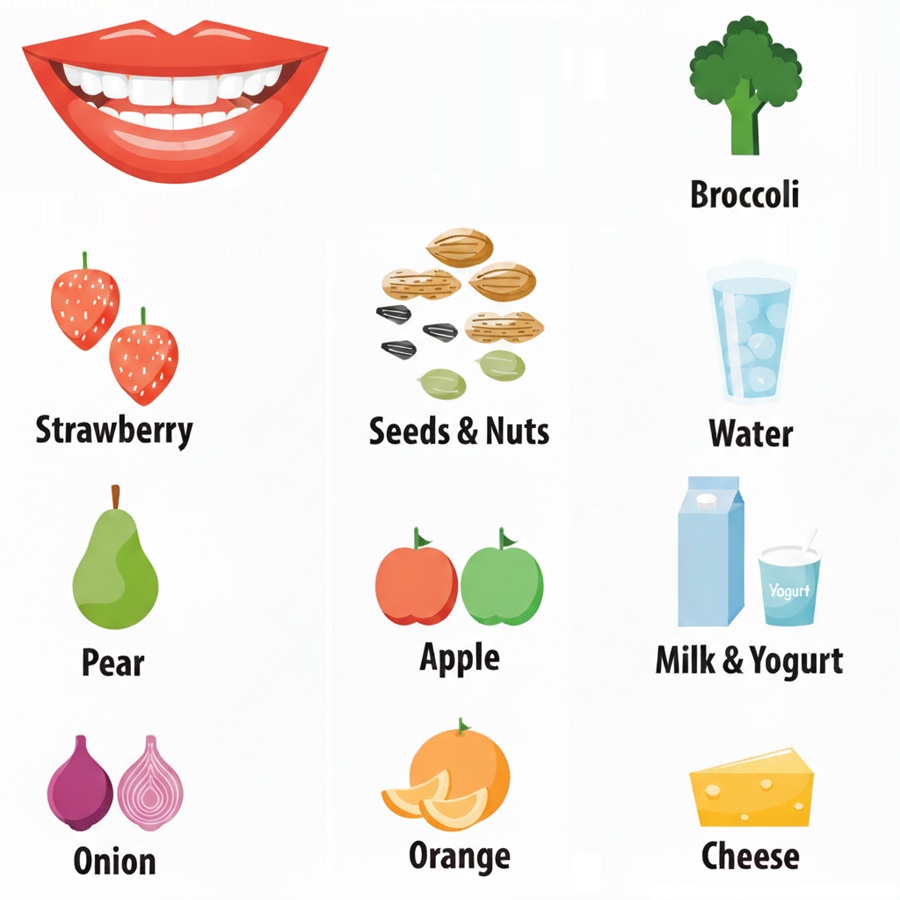
The White Diet: What to Eat for the First 72 Hours
The White Diet helps reduce pigment absorption during the vulnerable post-whitening window.
Safe foods include:
- White rice
- Plain chicken or turkey
- Eggs
- Yogurt
- Milk
- Cauliflower
Avoid:
- Coffee
- Tea
- Red wine
- Berries
- Tomato sauces
- Dark sodas
Following proper post-whitening care significantly reduces early shade relapse.
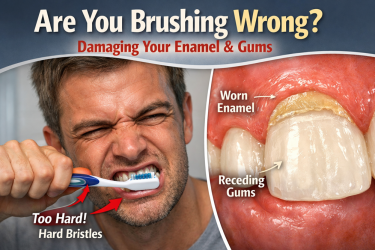
Why Enamel Thinning Makes Teeth Darken After Whitening
Enamel thinning yellow teeth appear darker because translucent enamel reveals dentin more clearly.
Acidic beverages (pH below 5.5), aggressive brushing, and grinding wear enamel gradually. Even 0.1 mm of enamel loss changes light reflection patterns measurably.
Professional Teeth Whitening vs Whitening Strips: Which Lasts Longer?
Professional teeth whitening penetrates deeper into dentin layers, producing longer-lasting brightness.
| Method | Average Stability Before Noticeable Relapse |
|---|---|
| In-Office Whitening | 12–24 months |
| Dentist Supervised Trays | 9–18 months |
| Whitening Strips | 3–6 months |
Randomized trials show professional systems achieve approximately 30–35% greater shade improvement compared to strip-based kits.
How to Fix Shade Relapse (Professional Solutions)
If teeth yellow after whitening significantly, options include:
- Touch-up bleaching trays
- Professional dental cleaning
- Switching to custom-fit trays
- Internal bleaching for non-vital teeth
- Veneers or bonding for resistant intrinsic stains
A dentist can determine whether relapse is surface staining or structural discoloration.
Post-Whitening Care: Daily Habits That Protect Your Results
Maintaining white teeth after whitening depends on consistent habits:
- Use a straw for dark beverages
- Rinse with water after meals
- Wait 30 minutes before brushing after acidic foods
- Avoid tobacco
- Schedule periodic professional cleanings
Maintenance whitening every 6–12 months slows natural shade relapse.
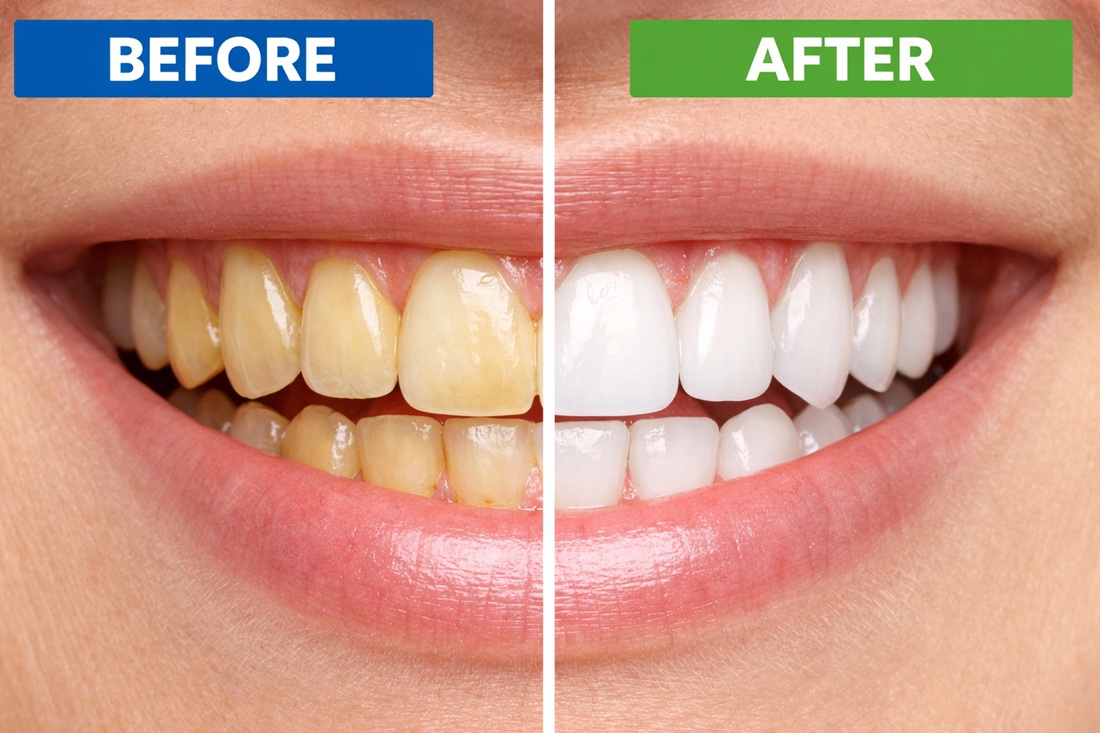
How to Tell the Difference: What Type of Yellowing Are You Seeing?
Not all shade changes mean the same thing. Use this quick comparison to understand what may be happening:
| What You Notice | Most Likely Cause | What It Means |
|---|---|---|
| Even, uniform yellowing on all teeth | Rehydration after bleaching | Normal and temporary; stabilizes in 1–2 weeks |
| Patchy or blotchy areas | Plaque buildup or uneven surface dehydration | Often improves with professional cleaning |
| Yellow near the gumline only | Gum recession exposing dentin | Root dentin does not respond well to whitening |
| One single dark tooth | Trauma or internal staining | May require internal bleaching |
If you are unsure which category applies to you, schedule an evaluation. Identifying the correct cause prevents unnecessary repeat bleaching.
Smart Touch-Up Strategy: A Maintenance Plan That Works
Instead of repeatedly whitening without a plan, follow a structured maintenance timeline:
Week 1:
Use sensitivity toothpaste that supports enamel strengthening. Avoid dark beverages or use a straw. Follow strict post-whitening care.
Month 1:
Resume normal diet cautiously. Limit coffee, red wine, and tobacco. Maintain excellent brushing and flossing habits.
Every 6 Months:
Consider a 30-minute professional touch-up session or use dentist-supervised custom trays at home.
Clinical data shows maintenance bleaching at 6–12 month intervals significantly slows shade relapse compared to waiting several years between treatments.
Quick Answer
Teeth yellow after whitening most commonly due to temporary enamel dehydration, natural dentin color showing through, open enamel pores absorbing pigments during the first 24–48 hours, or thin enamel that makes underlying dentin more visible. Mild shade relapse is normal and usually stabilizes within one to two weeks.
Best Dentist for Whitening in California and Texas
If you are looking for a dentist near me to address teeth whitening relapse, Gold Coast Dental provides professional whitening and post-whitening care across more than 19 locations in California and Texas.
YYou can check our locations page to view offices and find your nearest location for consultation.
Final Thoughts
Teeth whitening remains one of the safest cosmetic treatments in dentistry, but understanding why teeth yellow after whitening helps set realistic expectations. Mild shade relapse is common and manageable with the right maintenance strategy.
Gold Coast Dental has over 19 locations across California and Texas. If you notice teeth yellow after whitening or want longer-lasting professional teeth whitening results, you can call us now or book a session. Find your nearest Gold Coast Dental location or check our locations page to connect with a dentist in your area and read more about dental care in your area through our local guide.
Last reviewed February 2026.