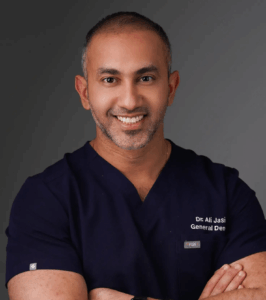
Trusted by Thousands, Across 20 Locations
Full mouth rehabilitation restores multiple damaged, worn, or missing teeth across both arches to rebuild bite stability and chewing function. It addresses structural breakdown caused by decay, trauma, grinding, or advanced gum disease and is planned in coordinated phases rather than isolated procedures.
This approach is recommended when dental problems affect overall bite balance, comfort, and long-term stability, not just appearance.
Clinical exam, digital X-rays and 3D scans are completed. Gum health, tooth condition and bite alignment are assessed. Treatment goals and needs are reviewed.

Gum disease, failing restorations or infected teeth are treated. Root canal therapy or extractions may be performed. Temporary restorations are used when needed to stabilise the bite.

Dental implants or bridges are placed. Teeth are prepared for crowns or veneers. Gum contouring and bite adjustments are completed as required.
Final crowns, veneers, bridges or dentures are placed. Bite balance is checked and results are monitored through follow-up visits.

Our patients are at the heart of everything we do. Read their stories and discover how compassionate care and trusted dentistry have made a difference in their smiles.
| Phase | Primary Goal | What Happens |
|---|---|---|
| Phase 1 |
Comprehensive Evaluation | Digital X-rays, 3D imaging, bite analysis, and structured treatment planning. |
| Phase 2 | Disease Control & Stabilization | Gum therapy, removal of failing restorations, infection management, temporary restorations when required. |
| Phase 3 | Structural Reconstruction | Placement of dental implants or bridges and preparation for crowns or veneers. |
| Phase 4 | Final Restorations & Bite Adjustment | Placement of final crowns, bridges, or dentures and precise bite balancing for comfort. |
| Phase 5 | Long-Term Maintenance | Ongoing monitoring, professional cleanings, and protective measures such as night guards. |
Note: Some phases may be completed quickly, while others require multiple visits over several months, depending on individual needs.
Full mouth rehabilitation is recommended for patients whose dental problems affect multiple teeth and overall bite stability. You may be a candidate if you have:
- Multiple missing or severely damaged teeth
- Advanced wear from grinding or acid erosion
- A collapsed, uneven or unstable bite
- Widespread decay or failing dental restorations
- Advanced gum disease that compromises tooth support
This treatment focuses on restoring balance, comfort and long-term function across the entire mouth and may be part of a comprehensive smile makeover for selected patients.
Each rehabilitation plan is tailored to your needs and may involve one or more of the following:
- Dental implants and implant-supported bridges
- Crowns and bridges and full-coverage restorations
- Veneers for worn, uneven or weakened teeth
- Gum disease therapy and soft-tissue grafting
- Bite correction and occlusal adjustment
- Clear aligners in selected cases
Not every patient requires every procedure. Treatment is planned carefully as part of restorative dentistry to support stability, comfort and predictable results.
How Treatment Scope Affects Cost
The cost of full mouth rehabilitation depends on:
- Number of teeth involved
- Need for implants or grafting
- Material selection
- Complexity of bite correction
Treatment may range from single-tooth restoration to full-arch reconstruction. A detailed plan and estimate are provided before treatment begins. The table below outlines typical ranges based on treatment scope.
Treatment Scope
What It Typically Includes
General Investment Range
Per-Tooth Restoration
Individual crowns, veneers, or onlays to restore damaged or weakened teeth
From $1,995 per tooth
Single-Arch or Moderate Care
Treatment focused on the upper or lower arch, often combining crowns, bridges, and bite adjustment
$15,000 – $30,000+
Full-Arch or Advanced Care
Rehabilitation of both arches, which may include dental implants, implant-supported dentures, extensive crown work, and gum therapy
$30,000 – $60,000+
After treatment, long-term success depends on daily care and routine follow-ups:
Ongoing care allows us to monitor your bite, restorations and gum health and make adjustments when needed.


Find quick answers to the most common questions our patients ask.
Full mouth rehabilitation is a structured treatment plan that restores or replaces damaged or missing teeth and corrects bite problems. It combines treatments such as implants, crowns, veneers, bridges and gum therapy to restore function and appearance across the entire mouth.
People with multiple missing or damaged teeth, advanced gum disease, large failing fillings, severe wear, bite collapse or dental trauma may benefit. It is also used when the bite needs to be raised due to loss of vertical dimension.
Treatment may include dental implants, implant-supported bridges or dentures, crowns, veneers, gum contouring, root canal therapy, bite correction and orthodontic aligners. Each plan is tailored, and not every patient needs every procedure.
Costs vary based on the number of teeth involved, the type of restorations and materials used. After a full examination and treatment plan, we provide a personalised estimate based on your needs.
We offer payment plans and work with most PPO insurance plans. Depending on your coverage, some procedures may be partially covered. Our team explains your benefits and payment options before treatment begins.
We gently increase vertical dimension using provisional crowns or occlusal splints. Once you adapt comfortably, final crowns, veneers or implant restorations are made to maintain the new bite height.
Most treatment plans take several months. Early phases focus on disease control and stabilisation, followed by provisional restorations and bite testing. Final restorations are placed once the mouth is stable.
We gradually increase bite height using provisional crowns or occlusal splints. Once you adapt comfortably, final crowns, veneers or implant restorations are made to maintain the corrected bite.
Procedures are performed with local anaesthesia, and sedation is available if needed. Some soreness may occur after surgery or tooth preparation, but discomfort is usually manageable with medication and proper aftercare.
In many cases, temporary teeth are used. They protect prepared teeth, support daily function and allow your dentist to test bite position and appearance before placing final restorations.
In selected cases, composite bonding, veneers, partial dentures or clear aligners may improve function and appearance without surgery. Severe tooth or bone loss may still require implants or crowns.
Restorations are designed to last many years. Long-term success depends on daily oral care, regular dental visits and managing habits such as grinding. With proper maintenance, results remain stable over time.
Yes. Gum disease is treated first through deep cleanings, laser therapy or surgery. Missing teeth are then replaced with implants, bridges or dentures to restore stability and function.
As with any major dental treatment, risks may include temporary soreness, infection or complications with implants or root canal therapy. Careful diagnostics, skilled treatment and follow-up visits help reduce these risks.
Yes. Full mouth rehabilitation is typically completed in planned stages. This allows healing between steps and helps each phase build toward a stable final result.
Delaying care may allow teeth to wear further, shift or loosen. Gum disease can worsen, and bite problems may become harder to correct. Early treatment often limits the need for more extensive care later.
Schedule a consultation. We evaluate your oral health, discuss your concerns, take digital scans and create a step-by-step plan so you can decide on timing, costs and next steps with confidence.
We know a great dental experience goes beyond clinical care. Here’s how we make your visits comfortable and stress‑free.
We’re open seven days a week with evening and weekend appointments at multiple locations. Same‑day visits are available so you never have to wait for relief.
High‑quality dental care should be within reach. We accept most PPO and many HMO plans, offer interest‑free payment plans and have in‑house specials for new patients.
Our modern offices feature state‑of‑the‑art technology, comfortable treatment rooms and entertainment options to help you feel at ease throughout your visit.
Book now and save with our limited‑time offers:
Free X‑rays, exam and consultation. New patients only.
PPO, HMO, or no insurance?
We help you understand your available options before treatment begins. We work with most major PPO and HMO plans. If you don’t have insurance, we explain in-house financing, installment plans, and current new-patient offers, including our $49 new-patient special.
Our dental offices are typically open 8 AM – 7 PM, including weekends.
Hours may vary by location. Check the location page or call us to confirm availability.
Use my location to find the closest Service Provider near me
اگر شما به زبان فارسی صحبت میکنید و به دنبال دندانپزشک فارسی زبان هستید، کلینیک دندانپزشکی Gold Coast Dental آماده ارائه خدماتی مانند دندانپزشک اورژانس، ایمپلنت، ارتودنسی و زیبایی دندان با انواع بیمه به شماست.
Si usted habla español y está buscando un dentista que hable su idioma, la clínica dental Gold Coast Dental ofrece servicios como emergencias dentales, implantes, ortodoncia y estética dental con diferentes seguros.
한국어를 사용하시고 한국어 가능한 치과를 찾고 계시다면, 골드코스트 덴탈 치과 클리닉은 응급치료, 임플란트, 교정 및 미용 치과 서비스를 다양한 보험과 함께 제공합니다.
如果您说中文并正在寻找讲中文的牙医,Gold Coast Dental 牙科诊所提供紧急牙科、种植牙、牙齿矫正和美容牙科服务,并接受各种保险。
日本語を話される方で日本語対応の歯科医をお探しであれば、Gold Coast Dental 歯科クリニックでは救急歯科、インプラント、矯正歯科、美容歯科など、各種保険対応のサービスを提供しています。
Please call (562) 242‑1411 or find your nearest dentist here.