Dental Implant Pain is the first thing most people ask about after they hear “implant surgery”.
At Gold Coast Dental, our teams across California and Texas use modern planning, precise surgical guides, and a multi-modal pain plan so most patients report mild, short-lived soreness—often easier than they expected.
Before we get to the 1–10 pain scale, a quick note: we’re realists. Even a gentle procedure can leave tissues tender for a few days. With a clear plan, though, you can expect a smooth recovery. If you prefer to review the implant pathway first, explore Our Comprehensive Dental Implant Services. If anxiety is part of your concern, Sedation Dentistry Options can make your visit calm from start to finish.
Location note: We serve many neighborhoods with same-day availability. If you’re comparing a dentist in Orange County or a dentist near me, call for a quick pain-management consult and timeline check for work, school, or travel.
How Painful is the Implant Procedure, Really? (The 1–10 Breakdown) — includes Dental Implant Pain
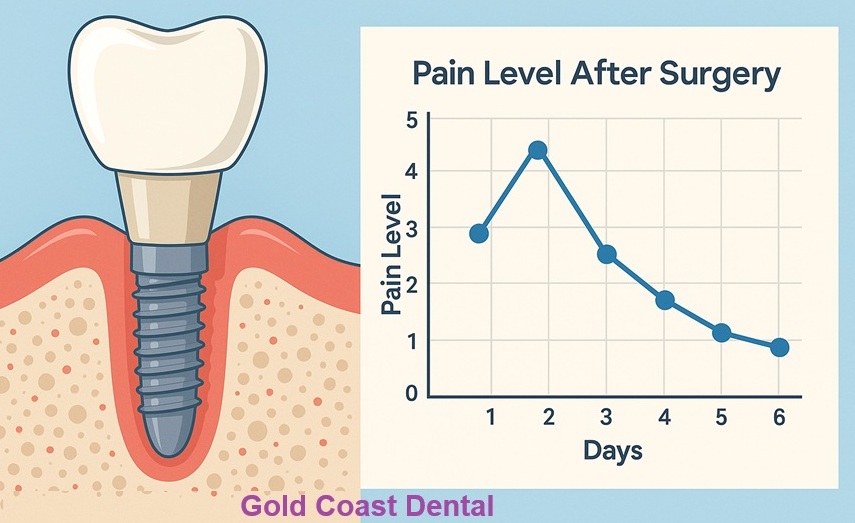
Dental Implant Pain is commonly rated 2–4/10 at its peak, dropping fast after day two. Many patients report minimal interference with daily tasks. In published studies, implant placement is often less unpleasant than a tooth extraction, with lower post-surgical pain and faster return to routine.
Typical patient-reported scale (single, straightforward implant):
- During procedure: 0–1/10 (numb, may feel pressure only).
- 0–6 hours after (as numbness fades): 1–3/10
- 24 hours (peak): 2–4/10
- 48 hours: 1–2/10
- 72 hours: 0–1/10
- Days 4–7: near 0; some tenderness with chewing is common.
Why this scale stays low: precise planning (CBCT), guided placement, flapless or mini-flap approaches when appropriate, and pre-emptive pain meds.
Is the Pain During the Actual Surgery Manageable?
You shouldn’t feel sharp pain during placement because the area is fully numbed; many patients choose light sedation to quiet anxiety. You may notice pressure or vibration as the implant is seated—normal, not painful.
What is the Peak Pain Level and When Should I Expect It?
Most patients peak around 24–48 hours at about 2–4/10, then improve quickly. Swelling often crests near Day 2, which explains the short-lived bump in soreness. If pain increases after Day 4 instead of fading, call us.
How Does Implant Pain Compare to a Tooth Extraction?
Randomized and cohort data show implant surgery is commonly perceived as less painful than tooth extraction, with fewer limits on daily activities. That comparison helps anxious patients set realistic expectations.
What Factors Influence a Patient’s Post-Procedure Pain Score?
Your 1–10 rating depends on:
- Surgical approach: flapless or mini-flap techniques and computer-guided placement usually mean smaller incisions and fewer sutures.
- Number of implants: more sites = more tenderness early on.
- Bone grafting or sinus lift: adds swelling and extends soreness for some people.
- Tissue quality & systemic health: smoking, uncontrolled diabetes, or poor oral hygiene can raise risk of inflammation.
- Anxiety level: stress lowers your pain threshold; sedation can help.
- Medication plan & timing: pre-emptive dosing reduces peaks.
How Long Does the Pain and Swelling Typically Last?
Most soreness fades in 3–5 days, with chewing tenderness sometimes lingering up to 7–10 days. Swelling usually peaks by Day 2 and subsides after. If symptoms worsen instead of improve, contact us.
What is the Best Strategy for Post-Operative Pain Management?
Simple, proven plan:
- Pre-emptive dose per your prescription 30–60 minutes before numbness wears off.
- First-line meds: alternating ibuprofen and acetaminophen gives strong relief for dental surgical pain. Avoid overlapping doses or exceeding daily limits.
- Cold packs 20 minutes on/20 off for the first 24–36 hours; sleep with head elevated night one and two.
- Soft, cool diet and no straws for 48 hours.
- Start gentle brushing nearby (not directly on sutures) that night or day one, plus a salt-water rinse after meals (if directed).
- Opioids rarely needed; if used, only for breakthrough pain and for a short window.
Need a simple path? Your visit will include a printed plan and a 48-hour check-in call. For anxiety relief or longer procedures, see Sedation Dentistry Options.
Does Digital or Guided Surgery Reduce the Overall Pain Score? — includes Dental Implant Pain
Dental Implant Pain tends to be lower with computer-guided and flapless approaches because incisions are smaller and chair time is shorter. Studies report less pain, less swelling, and fewer painkillers with these methods, alongside high satisfaction.
Our differentiator: We plan implants with CBCT and custom surgical guides whenever indicated. That precision often trims 1–2 points from patients’ peak 1–10 ratings.
Is Sedation Dentistry an Option to Eliminate All Discomfort?
Sedation calms anxiety and removes the “adrenaline spikes” that make pain feel worse. You’ll still be numb, and in many cases you’ll remember little of the visit. Sedation doesn’t replace good medication timing; it complements it.
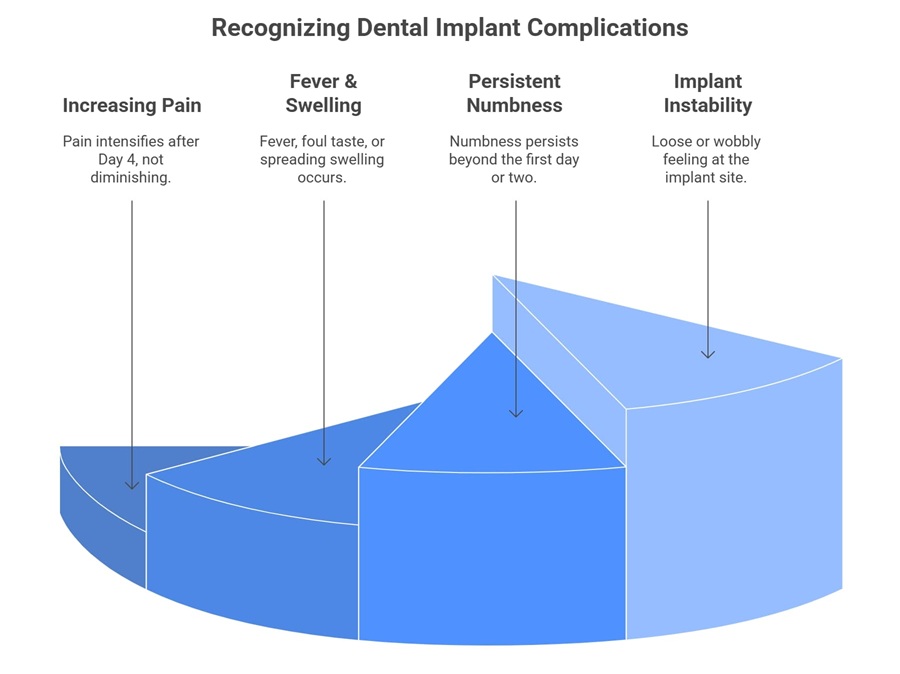
When is Pain a Red Flag? (Signs of Infection or Complication)
Call us if you notice:
- Pain increasing after Day 4, not decreasing
- Fever, foul taste, or spreading swelling
- Persistent numbness beyond the first day or two
- Loose or wobbly feeling at the implant site
These could signal infection, nerve irritation, or early implant instability and need a same-day check.
To learn how we manage gum health around implants, see Gum Disease Therapy.
What Pain Medications Will the Dentist Prescribe?
Most patients do well with ibuprofen + acetaminophen on a schedule for 48–72 hours, then taper. Some receive a short rescue prescription if grafting was extensive or if they can’t take NSAIDs. Your plan is matched to your health profile.
Is It Normal to Feel Pressure or Vibrations During the Procedure?
Yes. You might sense gentle vibration as the implant is placed. It’s not sharp pain because the area is fully anesthetized. If anything feels strong, raise your hand; we’ll add anesthetic.
How Does Bone Grafting Affect the 1–10 Pain Scale?
Grafting can raise early swelling and stiffness, nudging peak pain up about 1–2 points for some patients and extending tenderness a couple of days. Your surgeon will explain if grafting or a sinus lift is needed and how we’ll manage comfort.
For complex cases, read more about our surgical scope: Oral Surgery Procedures.
What Dietary Changes Can Minimize Pain in the First 48 Hours?
Think cold and soft: smoothies (no straws), yogurt, applesauce, chilled soups, eggs, mashed potatoes. Avoid seeds, chips, and hot, spicy foods on day one. Add protein to support healing.
What is the Typical Pain Score After the First Full Week of Healing? — includes Dental Implant Pain
Dental Implant Pain is usually 0–1/10 after one week for a straightforward case. If chewing still hurts more than mildly by days 7–10, we want to re-check the site and your bite.
What Is a Dental Implant? (Quick Refresher)
An implant is a small titanium post that replaces a tooth root and supports a crown. Premium, medical-grade titanium from top manufacturers has excellent biocompatibility and supports stable bone healing—one reason comfort improves quickly.
Learn about materials, timelines, and candidacy on Our Comprehensive Dental Implant Services and meet your surgical team at Meet Our Experienced Doctors.
Why It Matters / Benefits vs. Risks (Pain Context)
Benefits: long-term chewing comfort, stable bone support, natural look and feel, no removable sore spots like some dentures.
Risks: early infection, rare nerve irritation, or implant movement if instructions aren’t followed. Long-term pain years later often points to peri-implant inflammation, which needs care.
How It Works / What to Expect (Comfort Lens)
- Planning: CBCT scan and guided design for optimal position.
- Visit day: local anesthesia (with or without sedation); most people feel pressure only.
- Post-op: pre-printed plan, ice, scheduled meds, simple diet day one.
- Check-ins: messaging or call at 24–48 hours; in-office follow-up as needed.
Prefer a cost estimate and timeline? See our Dental Implants Offer or Schedule Your First Visit.
Preparation & Aftercare Tips (Pain-Smart List)
- Arrange a ride if using oral or IV sedation.
- Stock your fridge with soft foods and cold packs.
- Take your first medication dose before anesthesia fades.
- Sleep with your head elevated for two nights.
- Brush gently around, not on, sutures day one; add warm salt-water rinses after meals if advised.
- Skip smoking; it raises complication risk and can worsen soreness.
- If discomfort spikes after Day 4, call the office for guidance.
Ten Ways Gold Coast Dental Keeps Your Pain Score Low (Clinic Differentiators)
- Digital-guided placement (reduced trauma): CBCT planning and guides = smaller entries and fewer flaps. Pain scores and swelling tend to be lower.
- Pre-emptive multi-modal meds: pain plan begins before numbness fades so you never “chase” pain.
- Sedation options: nitrous and IV sedation to quiet anxiety.
- Swelling control protocol: timed cold therapy and head elevation reduce the main driver of early soreness.
- Clear “pain timeline”: our patients usually report 3/10 or less by Day 2, falling quickly. (Internal clinic trend; varies by case.)
- Direct after-hours contact: urgent concerns get same-day triage.
- Premium titanium systems: high biocompatibility supports calm tissue response. (Manufacturer data varies; ask us about brands we use.)
- Patient-specific pain mapping: we tailor dose, timing, and refills to your history.
- Expectation setting vs. extractions: many patients find implant recovery easier than a complex extraction.
- Long-term comfort: once healed, chewing comfort is steady for years; new discomfort later needs a quick gum-health check.
Table 1. Day-by-Day Pain & Care Timeline (Typical Single Implant)
| Day | Expected Pain (1–10) | What You’ll Feel | What Helps Most |
|---|---|---|---|
| Surgery day (numb) | 0–1 | Pressure, vibration | Anesthetic + optional sedation; rest |
| 0–6 hours | 1–3 | Tingling as numbness fades | First scheduled dose; cold packs |
| 24 hours (peak) | 2–4 | Swelling, stiff gums | Alternating ibuprofen/acetaminophen; cold packs; head up |
| 48 hours | 1–2 | Swelling plateau, less sore | Light meals; short walks; sleep elevated |
| 72 hours | 0–1 | Mild tenderness with chewing | Soft foods; switch to warm salt-water rinses |
| Days 4–7 | ≈ 0 | Back to normal routines | Resume normal brushing (avoid sutures until cleared) |
If pain increases after Day 4, contact us for a same-day check.
Table 2. Medication Plan Snapshot (Discuss With Your Dentist)
| Goal | Option | Notes |
|---|---|---|
| Baseline pain control | Ibuprofen (if allowed) + Acetaminophen | Combo outperforms either alone for acute dental pain; follow dosage limits. |
| NSAID-sparing | Acetaminophen alone | For those who can’t take NSAIDs. |
| Breakthrough pain (short use) | Short opioid prescription | Only if required; limited quantity. |
| Swelling | Cold therapy | 20-on/20-off first day; head elevated night one and two. |
Extra Technical Notes (for patients who want details)
- We use the Numerical Rating Scale (NRS) for pain (0–10); it’s easy to track during check-ins.
- Peak swelling correlates with flap size; flapless surgery helps lower early swelling and analgesic use.
- Guided surgery vs. freehand can show lower pain scores and shorter chair time in select cases.
- Peri-implant inflammation years later can cause new discomfort; early care restores comfort and protects bone.
- Pre-emptive analgesia (dose before pain) reduces peaks and rescue-med use.
Ready to Plan Next Steps?
If you’re weighing options with a dentist in San Diego or browsing “dentist near me,” our teams can map out your comfort plan, budget, and timeline on the first call. Review financing and special bundles at Dental Implants Offer and use Schedule Your First Visit to pick a time that fits.
Call to Action
Dental Implant Pain doesn’t have to be a mystery—or a barrier. With precise planning, guided placement, and a clear home routine, most patients see pain peak low and fade fast. Gold Coast Dental in 20 locations across California and Texas.
To plan your visit, check our locations page to find your nearest location, then call us now or book a session online. For local tips, see our local guide or read more about dental care in your area.
We’re here to keep you comfortable and confident, from consult through your first bite.