Bleeding gums in the first sentence, as requested, because humans love rules almost as much as they love ignoring them.
If you’re seeing blood when you brush or floss, it’s easy to shrug it off as “I just brushed too hard.” Sometimes that’s true. Often, it’s your gums waving a small red flag that says: Inflammation lives here.
Below, we’ll explore what bleeding gums can mean, the 3 warning signs you shouldn’t ignore, what you can do at home, and when you should get a dentist involved. I’ll keep it clinical, clear, and calm, like a good chairside chat.
The 3 Warning Signs You Shouldn’t Ignore
Here’s a simple “what it could mean” table. It’s not a diagnosis, it’s a smarter way to decide what to do next.
| Warning sign | What it may suggest | What to do next |
|---|---|---|
| Bleeding that continues beyond ~2 weeks of consistent gentle cleaning | Ongoing gingivitis or early periodontitis risk | Improve technique + book an exam if it doesn’t settle |
| Bleeding + persistent bad breath or bad taste | Gum inflammation + bacteria in plaque/biofilm; possible pockets | Add interdental cleaning; consider a professional cleaning |
| Swollen, tender gums or gums pulling away; teeth feel “longer” | Higher concern for periodontitis; needs probing + X-rays | Dental visit soon; ask for periodontal measurements |
What Is Bleeding Gums, Really?
Bleeding gums are a symptom, not a “condition name.” Most of the time, they happen because the gum tissue gets inflamed. Inflamed tissue has more fragile blood vessels and an active immune response, so it bleeds more easily with brushing or flossing.
The most common pathway looks like this:
- Plaque (a sticky bacterial biofilm) collects at the gumline
- Your immune system reacts
- Gum tissue becomes red, puffy, and bleeds with contact
- If plaque stays, it can harden into calculus (tartar), which is harder to remove at home
- In some people, inflammation can progress deeper and damage the support around teeth (periodontitis)
Analogy that actually helps: your gums are like the weather seal around a window. When the seal is healthy, it stays tight and quiet. When it’s irritated, it swells, loosens, and lets “stuff” get in and fester.
If you want a quick, patient-friendly overview of warning signs and next steps, read:
Gum Disease Fast Facts: Signs and What to Do
Why Do My Gums Bleed When I Brush or Floss?
Bleeding gums when you brush or floss usually means inflammation at the gumline, most often from plaque that’s been sitting there long enough to irritate the tissue.
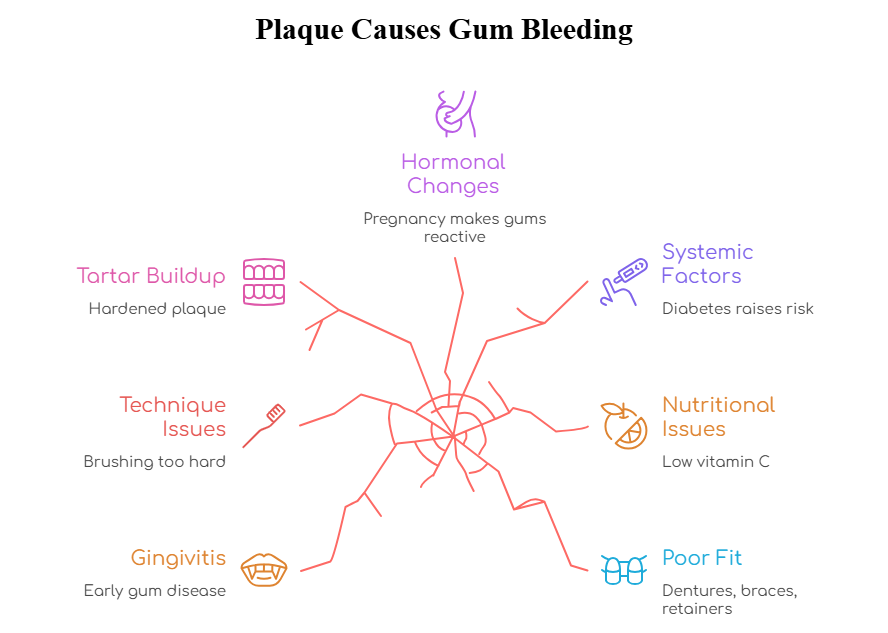
If your long-tail question is “why are my gums bleeding when I brush my teeth”, here are the most common reasons patients run into:
- Gingivitis (early gum disease): plaque triggers inflammation; it often improves with consistent daily cleaning and professional support.
- Technique issues: brushing too hard, frayed brush, snapping floss, or missing the gumline angle.
- Tartar buildup: once plaque hardens, brushing won’t lift it off.
- Hormonal changes: pregnancy can make gums more reactive to plaque.
- Systemic factors: diabetes can raise gum disease risk and slow healing.
- Nutritional issues: low vitamin C can contribute to gum bleeding in true deficiency states.
- Poorly fitting dentures, braces, or retainers: If a denture rubs or a bracket/wire sits too close to the gumline, it can cause repeated friction and small tissue injuries. That irritation can make your gums bleed during brushing or flossing, even if your hygiene is decent. If you notice a sore spot, a sharp edge, or bleeding that matches the location of a brace or denture contact point, a quick adjustment can often solve the problem.
If you want to understand specialty gum care, explore:
Periodontics (Gum Specialist Care) and for treatment options beyond basic cleanings:
Gum Disease Therapy
Is It Normal for Gums to Bleed Every Day?
Bleeding gums every day is common, but “common” and “normal” aren’t the same thing. Healthy gum tissue usually shouldn’t bleed with gentle, consistent home care.
If you’re asking “is it normal for gums to bleed everyday”, here’s a practical way to think:
- If bleeding happens for a few days after you restart flossing, it can improve as inflammation cools down (assuming you floss gently and daily).
- If bleeding continues past ~2 weeks of good technique, it’s time to stop guessing and get measurements (probing depths, bleeding points, tartar levels).
What Are the First Signs of Gingivitis You Should Look Out For?
Early gingivitis often shows up as subtle changes that are easy to ignore:
- bleeding with brushing or flossing
- redness along the gumline
- swelling or “puffy” gum edges
- tenderness when you touch the gumline
- bad breath that keeps coming back
The good news: early plaque-related gum inflammation often improves when you remove plaque daily and get professional plaque control when needed.
Can a Vitamin Deficiency Actually Cause Bleeding Gums?
Yes. If you’re searching “what vitamin deficiency causes bleeding gums”, the big one people talk about is vitamin C. Vitamin C supports collagen formation and blood vessel stability. In true deficiency states, gums can swell and bleed more easily.
Vitamin K matters for clotting. If you’re on anticoagulants or you have medical conditions that affect clotting, don’t self-dose vitamins without medical guidance.
If gum bleeding is heavy, happens with minimal contact, or doesn’t stop, it can sometimes relate to problems beyond plaque irritation. Less commonly, issues like platelet disorders, inherited bleeding conditions such as hemophilia, or blood-related illnesses such as leukemia can increase bleeding tendency. Anemia can also overlap with gum sensitivity and inflammation. This doesn’t mean bleeding gums equals a serious disease, but if you also notice easy bruising, frequent nosebleeds, unusual fatigue, or bleeding elsewhere, it’s a good reason to ask your physician for basic blood tests while your dentist checks your gums locally.
How Does Plaque Buildup Lead to Gum Inflammation?
Plaque is not “food stuck on teeth.” It’s a living bacterial biofilm that forms quickly and sticks well. The bacteria and their byproducts trigger your immune response. That immune activity changes gum tissue behavior and makes bleeding more likely.
Technical detail #1 (clinical measurement): Dentists track inflammation using Bleeding on Probing (BOP). If a gentle probe causes bleeding at many sites, it signals active inflammation.
Technical detail #2: In periodontal charting, probing depth (often in millimeters) helps tell whether the issue looks like gingivitis (shallower) or periodontitis (deeper pockets with attachment loss).
Are Hormonal Changes During Pregnancy Making Your Gums Bleed?
Pregnancy can raise gum sensitivity because hormone changes affect blood flow and immune response, which can make gums react more strongly to plaque. This is often called pregnancy gingivitis.
If you’re typing “bleeding gums during pregnancy what to do”, the answer is usually not dramatic:
- brush gently twice a day
- clean between teeth daily (floss or water flosser)
- keep dental cleanings on your calendar
If you have heavy bleeding, major swelling, or pain, get checked. Pregnancy isn’t a free pass for gum disease.
Could Your Bleeding Gums Be a Sign of a More Serious Health Issue?
Sometimes. Most bleeding gums come from local plaque inflammation. Still, there are real connections between gum inflammation and overall health.
- Diabetes: can raise gum disease risk and slow healing.
- Cardiovascular health: chronic inflammation is not something to ignore.
If you’re searching “connection between bleeding gums and heart disease”, the smart takeaway is: don’t ignore long-running gum inflammation. Treating gum disease is one part of lowering inflammatory load.
What Happens If You Ignore Swollen and Bleeding Gums?
Ignoring bleeding gums can allow inflammation to settle deeper.
- Gingivitis stays in the gum tissue.
- Periodontitis can involve loss of attachment and bone support around teeth.
That’s where you start seeing things like:
- gum recession (“teeth look longer”)
- deeper pockets
- tooth mobility
- more stubborn bad breath
- higher risk of tooth loss over time
If you’re looking up “home remedies for swollen and bleeding gums”, I get it. People want quick relief. Just keep the goal straight: home care can reduce inflammation, but it can’t remove tartar under the gumline.
A practical read that ties oral habits to long-term tooth stability (without weird myths):
Japanese Teeth Longevity: What People Get Right
How Do Dentists Treat Severe Gum Disease and Periodontitis?
When gum disease looks more advanced, dentists stop guessing and start measuring.
Technical detail #3: A periodontal exam often includes:
- probing depths in millimeters
- bleeding points (BOP)
- clinical attachment levels (CAL)
- gum recession measurements
- X-rays to check bone levels
Common treatment steps:
- Professional dental cleaning (prophylaxis): for plaque/tartar above the gumline and shallow areas.
- Scaling and root planing (deep cleaning): for deeper pockets and tartar below the gumline.
- Periodontal maintenance: more frequent cleanings for people who build tartar fast or have a history of periodontitis.
- Adjuncts when indicated: antibacterial rinses, localized antimicrobials, referral to a periodontist.
If you want the “what’s next” treatment pathway in one place, this page stays focused:
Gum Disease Therapy: Treatment Options and What to Expect
Can Brushing Too Hard Damage Your Gums and Cause Bleeding?
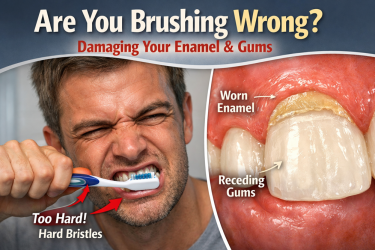
Yes. Overbrushing can irritate gum tissue and contribute to recession, especially with a hard-bristled brush or aggressive technique.
If your long-tail focus is “proper brushing technique to prevent bleeding gums”, here’s the quick chairside version:
- Use a soft-bristled brush.
- Aim bristles at a slight angle toward the gumline.
- Use small circles, light pressure.
- Brush for two minutes, not two minutes of violence.
- Replace the brush head when bristles splay.
When Is It Exactly Time to See a Dentist for Bleeding Gums?
Bleeding gums deserve a dental visit when any of these show up:
- bleeding lasts beyond ~2 weeks of gentle, consistent brushing + flossing
- swelling, pain, or gum recession
- bad breath that won’t quit
- loose teeth or bite changes
- you’re pregnant and symptoms are worsening
- you have diabetes or suspect diabetes symptoms (dry mouth, slow healing, frequent thirst)
If you’re typing “when should I worry about my bleeding gums”, this is your answer: worry less about the blood itself and more about duration + pattern + other signs.
Are There Any Effective Home Remedies to Stop Gums from Bleeding?
People search “how to stop bleeding gums immediately at home” because blood is alarming. Reality check: you can often reduce irritation quickly, but you can’t “erase” gum inflammation in one night if plaque and tartar have been building for months.
Here’s what can help:
- Warm salt water rinse: can soothe tissue and reduce irritation short-term.
- Gentle brushing and flossing: keep cleaning, but fix technique.
- Cold compress (outside cheek): can calm tenderness if gums feel sore.
- Switch to a soft brush + gentle toothpaste: if you’re hunting “best toothpaste for bleeding and inflamed gums”, pick something you can tolerate daily.
- Mouthwash: some mouthwashes help as an add-on to daily plaque removal.
Technical detail #4: Prescription antibacterial rinses can help short-term in some cases, but dentists usually guide duration because some options can stain teeth or change taste.
If your question is “how to reverse gingivitis naturally at home”, you can often reverse early gingivitis with consistent plaque removal. “Naturally” still means brushing and cleaning between teeth, not rubbing mysterious oils on your gums and hoping biology changes its mind.
Why Can Dry Mouth (Xerostomia) Make Gums Bleed?
Dry mouth reduces saliva, and saliva acts like your mouth’s natural rinse. When saliva drops, plaque sticks more easily, acids and bacteria linger longer, and gum tissue can get irritated faster. Many common medications can cause dry mouth (such as certain allergy meds, antidepressants, blood pressure meds, and others), and mouth breathing can dry the gums overnight. If you wake up with a dry mouth, sticky saliva, or a sore throat, treating dry mouth and improving hydration can make gum healing easier, alongside normal brushing and interdental cleaning.
If you’re worried about pain and you like seeing how real patients describe it, this internal post helps set expectations calmly: Dental Implant Pain Scale: What Patients Rate It (1–10)
Does Flossing More Often Help Stop Bleeding Gums in the Long Run?
Yes, in many cases. If you’re asking “bleeding gums when flossing for the first time”, bleeding can happen because the gums are already inflamed and the tissue hasn’t been cleaned well between teeth. With daily gentle flossing, bleeding often improves as inflammation drops.
If you’re deciding between tools:
String floss vs water flosser
- String floss can scrape plaque along the tooth surface and slightly under the gum edge when used correctly.
- Water flossers can help people who hate string floss, have braces, or struggle with dexterity. Consistency matters more than floss “purity.”
- If your question is “does using a water flosser reduce gum bleeding better than string floss”, many patients do well with either, as long as they do it daily and gently.
Technical detail #5: Dentists often focus less on the tool and more on whether you’re disrupting plaque daily. Plaque reforms fast.
What Is the Best Daily Oral Hygiene Routine to Prevent Gum Disease?
If you want the calm, effective routine that protects gums without turning your bathroom into a dental lab:
- Brush twice daily with fluoride toothpaste for two minutes.
- Clean between teeth once daily (floss, interdental brush, or water flosser).
- Focus on the gumline, gently.
- Keep regular professional cleanings based on your risk (history of gum disease, diabetes, pregnancy, smoking/vaping, crowding).
If you’re searching “how long does it take for gums to stop bleeding”, many mild gingivitis cases improve within 1–2 weeks after consistent plaque removal, but tartar and deeper pockets need professional care.
How Are Bleeding Gums Connected to Chronic Bad Breath?
If you’re looking up “bleeding gums and bad breath causes”, here’s the clean explanation:
- Gum inflammation increases crevices where bacteria thrive.
- Bacteria break down proteins and release odor compounds (that stubborn bad breath smell).
- If pockets deepen, odor can stick around even if you brush the teeth surfaces well.
Bad breath that doesn’t improve after better home care is a strong reason to get checked for gum inflammation and tartar under the gumline.
Benefits vs Risks: Why Treat Bleeding Gums Early?
Treating early gum inflammation is usually easier, cheaper, and more comfortable than treating advanced disease.
Benefits of addressing bleeding early
- less inflammation and tenderness
- lower risk of progression to periodontitis
- fresher breath
- easier cleanings and fewer surprises at checkups
Risks of ignoring it
- tartar builds and becomes harder to remove
- pockets may deepen
- more time, cost, and visits later
- potential long-term tooth support loss
Comparisons Patients Actually Care About
Gingivitis vs periodontitis (simple comparison)
- Gingivitis: inflammation and bleeding, usually no permanent attachment loss; often improves with plaque control.
- Periodontitis: inflammation plus measurable support loss (attachment/bone); needs professional treatment and long-term maintenance.
Home care vs professional care
- Home care removes plaque daily.
- Professional care removes tartar and checks pockets, bleeding points, and bone levels.
Home care is daily defense. Professional care is the inspection and repair crew.
“Painless Bleeding Gums for No Reason” Isn’t Really “No Reason”
People search “painless bleeding gums for no reason” because it feels random. In gum disease, pain often comes late. Bleeding can show up early because it’s tied to inflammation, not nerve pain.
That’s also why you don’t want to use pain as your “am I okay?” test. Gums can bleed long before they hurt.

To sum up
Bleeding gums are usually your early warning system, not a random glitch. If you’ve been Googling “why are my gums bleeding when I brush my teeth” or “is it normal for gums to bleed everyday”, take it as a prompt to tighten daily care and get a proper exam if the pattern sticks around. If you want clarity fast, schedule a dental visit and ask for gum measurements (probing depths + bleeding points). That’s how you stop guessing and start fixing the real cause of bleeding gums.
If you’re also researching other dental decision points that sometimes show up alongside gum issues, these internal guides are useful and straightforward:
Non-Surgical Endodontic Retreatment Guide
24 Signs You May Need a Tooth Extraction
Take the Next Step for Healthier Gums
If your gums bleed regularly when you brush or floss, it’s a good idea to have them checked. Early gum inflammation is often easy to manage when plaque and tartar are addressed before deeper damage develops.
At Gold Coast Dental, our team evaluates gum health with a careful periodontal exam that includes gum measurements, inflammation assessment, and personalized guidance on daily oral care.
If treatment is needed, you can learn more about available options such as
gum disease therapy or specialized periodontal care.
If you’re noticing persistent bleeding, swelling, or bad breath, scheduling an evaluation can help clarify what’s happening and what steps may improve your gum health.
Call (562) 242‑1411 or request an appointment online to speak with our team.