Trusted by Thousands, Across 20 Locations
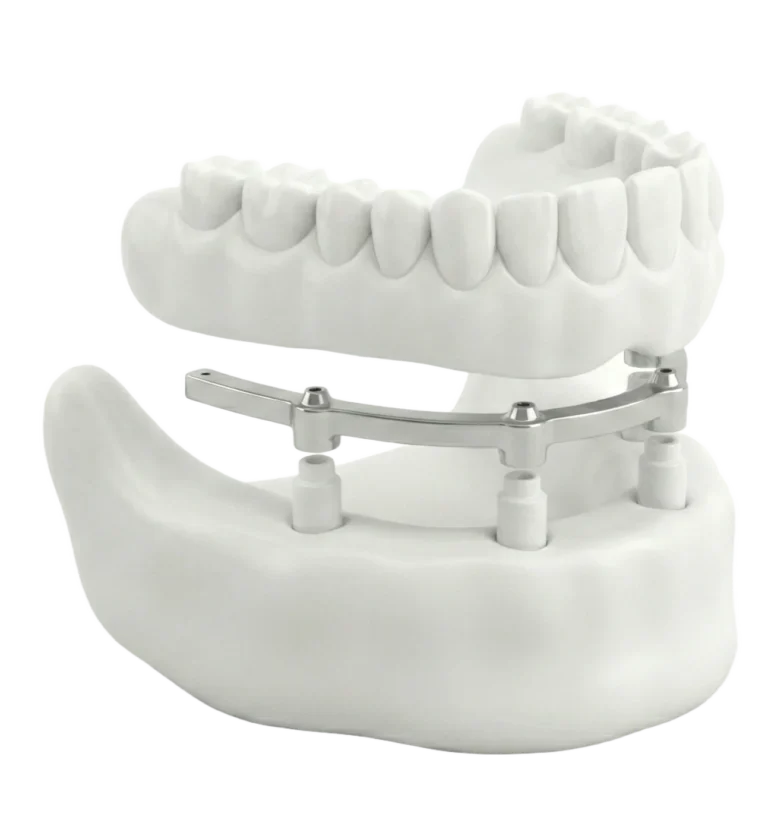
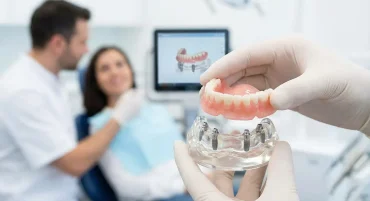
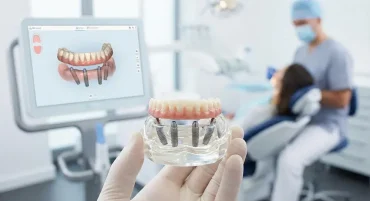
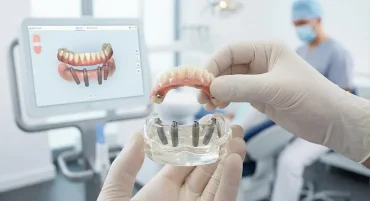
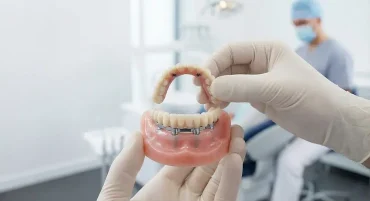
Two implants are positioned in the front of the jaw, while two are placed toward the back at an angle to improve anchorage in available bone. This angled placement allows the implants to engage stronger anterior bone and often reduces the need for grafting procedures.
A fixed bridge attaches to these four implants. The result is a stable, non-removable solution designed to restore chewing strength and support daily function. In many cases, this approach may be part of a broader full mouth rehabilitation plan when most or all teeth in one arch require replacement.
All-on-4 is one treatment option within the wider category of implant-supported dentures, which use dental implants rather than gum tissue for long-term support.
This approach is often considered when:
Implant positioning is guided by the final bridge design rather than placing implants first and adapting later. This approach helps align bite forces, arch shape, and restorative contours from the beginning.
Pre-operative imaging is used to evaluate bone volume, nerve position, sinus anatomy, and angulation. This allows more controlled implant placement and reduces guesswork during surgery.
Bite forces are assessed and adjusted to protect the implants and prosthesis. Proper force distribution reduces mechanical overload and helps support long-term stability.
Post-placement follow-ups are scheduled to monitor tissue health, prosthesis integrity, and hygiene access. Early adjustments help prevent complications and extend prosthesis lifespan.
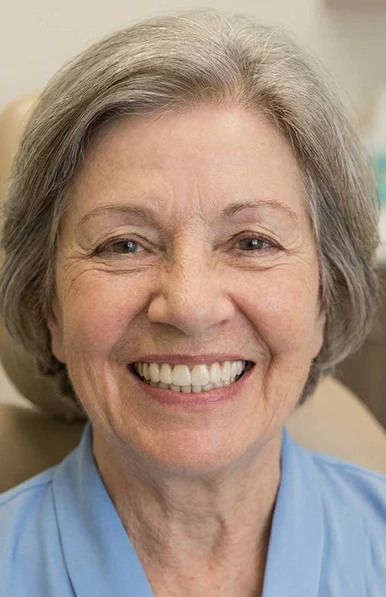
Our patients are at the heart of everything we do. Read their stories and discover how compassionate care and trusted dentistry have made a difference in their smiles.
Here is a side-by-side comparison to clarify how All-on-4 differs from a traditional removable denture in stability, support, and daily care.
| Aspect | All-on-4 Implant Bridge | Traditional Removable Denture |
|---|---|---|
| Support source | Anchored to four dental implants placed in bone | Rests directly on gum tissue |
| Force distribution | Bite forces transferred to implants and jawbone | Pressure concentrated on soft tissue |
| Stability during chewing | Fixed in place | May shift under load |
| Bone response over time | Implants help maintain bone volume | Progressive bone reduction common |
| Speech control | Stable base supports clearer pronunciation | Movement may affect speech in some cases |
| Maintenance routine | Brushed in place with under-bridge cleaning | Removed daily and soaked overnight |
| Long-term adjustments | Bridge may require maintenance over years | Frequent relines due to bone changes |
Temporary bridges are often made from reinforced acrylic. Final restorations may include:
Published studies report strong mid-term survival for four-implant full-arch designs. Implant survival commonly exceeds 90 percent over extended follow-up periods when maintenance is consistent. Like any restoration, the bridge itself may require repair or replacement after years of wear.
Not every patient needs the same solution. All-on-4 may be appropriate if:
- You are missing most or all teeth in one arch
- You are tired of removable dentures
- You want a fixed alternative
- You have moderate bone loss but still adequate structure in the front of the jaw
A clinical exam, imaging, and bite evaluation determine whether this design fits your situation. In some cases, additional implants or a different full-arch plan may be recommended.
Most full-arch treatments range from approximately $20,000 to $40,000 per arch.
Final cost depends on:
- Type of final material
- Whether extractions are needed
- Condition of existing bone
- Whether one or both arches are treated
Cost reflects surgical complexity, restorative material, laboratory design, and follow-up care rather than just the number of implants. A detailed estimate is provided before treatment begins. Financing options are available for qualified patients.
With routine care and regular professional maintenance:
- Implants are designed for long-term function
- The bridge may need refurbishment over time
- Night guards may be recommended if clenching occurs
Long-term stability depends on oral hygiene, bite forces, and consistent follow-up visits.
- Reported implant survival: 94–98% over 6–11 years
- Reported 5-year survival: ~98.8% for four-implant bridges in a large cohort
- Bridge maintenance: often repair or replacement after 10–15 years, depending on wear and bite forces
When All-on-4 May Not Be Ideal
This design may not be recommended if:
- Bone loss is too advanced
- Medical conditions interfere with healing
- A different implant distribution provides better support
In those cases, alternatives such as additional implants or staged reconstruction may be discussed.
Consistent daily care and follow-ups help protect the implants, the gums, and the bridge over time.


Find quick answers to the most common questions our patients ask.
All‑on‑4 uses four implants – two in front and two angled at the back – to anchor a full bridge of teeth. By avoiding most bone grafts, this technique lets us place a temporary set the same day, so you leave the office with fixed, functioning teeth.
Typical 2025 fees range from about $20,000 to $35,000 per arch depending on materials and location. Earlier research found averages around $42,400 per arch, but advances have lowered costs. We’ll give you a custom quote and review financing to make treatment manageable.
A single arch generally falls within the $20k–$35k range. Restoring both arches typically doubles the fee because of additional implants and prosthetics. During your consultation we’ll explain the exact costs for one or two arches and help you explore payment plans.
You’ll leave surgery with a secure provisional bridge attached to the implants. It feels and functions like natural teeth while you heal. After a few months, we replace it with a stronger, custom bridge — so you enjoy fixed teeth immediately, then upgrade later.
Studies report implant survival between 94% and 98% over 6–11 years (Gaonkar et al., 2021). With daily brushing, flossing and regular checkups, your implants could serve you for decades. The bridge may need replacement after 10–15 years due to normal wear.
All‑on‑4 relies on four implants; All‑on‑6 adds two more for extra stability. Both demonstrate similar success rates over five years (Caramês et al., 2025). Your dentist may recommend six implants if your bite forces are high or bone volume allows additional support.
Usually yes. The back implants are angled to utilize existing bone and avoid sinuses or nerves. When resorption is severe, bone grafting or switching to an All‑on‑6/All‑on‑8 plan may be necessary. A personal evaluation will reveal the best approach for you.
You may feel mild swelling and tenderness for the first few days, controlled with medication. Many people return to normal routines within a week, but stick to a soft diet until healing progresses. We’ll provide personalized tips to keep you comfortable.
Absolutely. We customize the shape, size and color of your new teeth to complement your face. The bridge sits snugly on your gums and is polished for comfort, so you can chew, talk and smile naturally.
Failure is uncommon. If a post does fail, we can usually remove it, allow the area to heal and insert a new implant. Because the bridge is screw‑retained, we detach it for adjustments and reinstall it once everything stabilizes.
After the healing phase, you’ll be able to enjoy most foods, including apples, nuts and steak. In the first weeks, follow a soft diet to protect your implants. Once we confirm stability, you can bite and chew confidently.
Yes. We accept most major PPO insurance and collaborate with lenders to provide financing. Down payments and monthly terms depend on your credit and chosen program, but we’re committed to finding an affordable plan that suits your budget.
We know a great dental experience goes beyond clinical care. Here’s how we make your visits comfortable and stress‑free.
We’re open seven days a week with evening and weekend appointments at multiple locations. Same‑day visits are available so you never have to wait for relief.
High‑quality dental care should be within reach. We accept most PPO and many HMO plans, offer interest‑free payment plans and have in‑house specials for new patients.
Our modern offices feature state‑of‑the‑art technology, comfortable treatment rooms and entertainment options to help you feel at ease throughout your visit.
Book now and save with our limited‑time offers:
Free X‑rays, exam and consultation. New patients only.
PPO, HMO, or no insurance?
We help you understand your available options before treatment begins. We work with most major PPO and HMO plans. If you don’t have insurance, we explain in-house financing, installment plans, and current new-patient offers, including our $49 new-patient special.
Our dental offices are typically open 8 AM – 7 PM, including weekends.
Hours may vary by location. Check the location page or call us to confirm availability.
Use my location to find the closest Service Provider near me
اگر شما به زبان فارسی صحبت میکنید و به دنبال دندانپزشک فارسی زبان هستید، کلینیک دندانپزشکی Gold Coast Dental آماده ارائه خدماتی مانند دندانپزشک اورژانس، ایمپلنت، ارتودنسی و زیبایی دندان با انواع بیمه به شماست.
Si usted habla español y está buscando un dentista que hable su idioma, la clínica dental Gold Coast Dental ofrece servicios como emergencias dentales, implantes, ortodoncia y estética dental con diferentes seguros.
한국어를 사용하시고 한국어 가능한 치과를 찾고 계시다면, 골드코스트 덴탈 치과 클리닉은 응급치료, 임플란트, 교정 및 미용 치과 서비스를 다양한 보험과 함께 제공합니다.
如果您说中文并正在寻找讲中文的牙医,Gold Coast Dental 牙科诊所提供紧急牙科、种植牙、牙齿矫正和美容牙科服务,并接受各种保险。
日本語を話される方で日本語対応の歯科医をお探しであれば、Gold Coast Dental 歯科クリニックでは救急歯科、インプラント、矯正歯科、美容歯科など、各種保険対応のサービスを提供しています。
Please call (562) 242‑1411 or find your nearest dentist here.