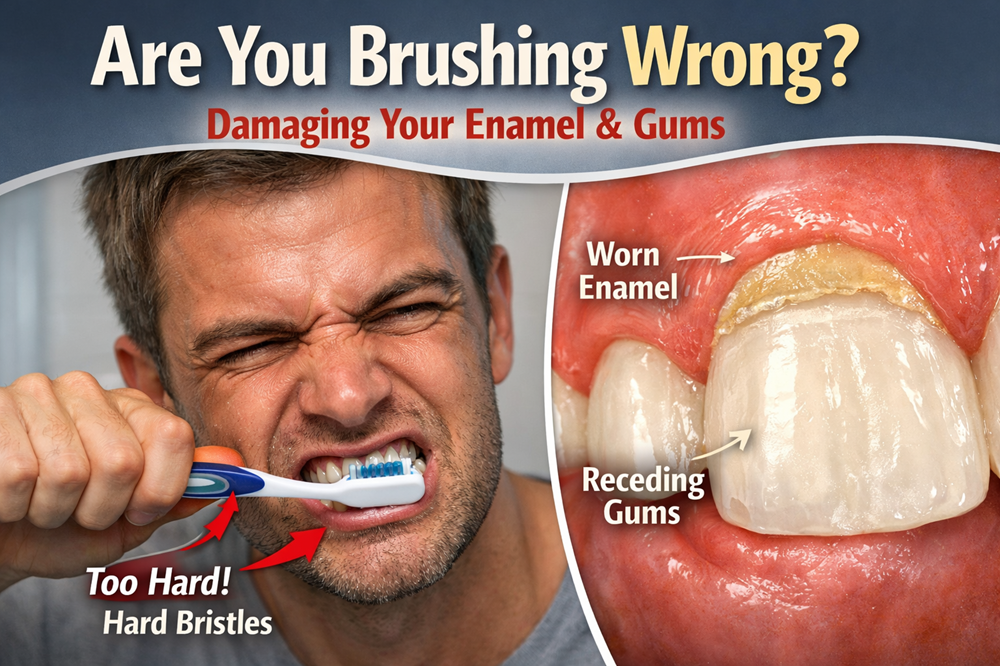
Your toothbrush is the frontline defender against cavities, plaque and gum disease, but when used incorrectly it can also be a silent destroyer of tooth enamel. Many adults develop habits—pressing too hard, brushing at the wrong time, using stiff bristles or abrasive toothpastes—that gradually erode the protective enamel layer. Because enamel does not regenerate, understanding the common toothbrushing mistakes adults make is key to protecting your teeth for life. This guide explains what happens if you don’t brush your teeth correctly, offers practical strategies to stop brushing your teeth so aggressively, and shows how to brush teeth without damaging enamel. We also answer frequently asked questions about receding gums, rinsing with water, and repairing thinned enamel naturally.
Are You Brushing Too Hard and Destroying Your Enamel?
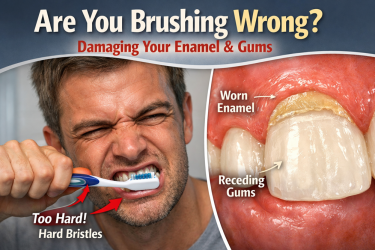
Are you brushing your teeth too hard and destroying your enamel? Signs you are brushing your teeth too hard include frayed bristles within a few weeks, receding gums and sensitivity. In a narrative review, abrasive lesions were associated with brushing forces of around 2.9 ± 0.4 N, whereas no abrasion occurred at forces around 2.1 ± 0.3 N. That difference of less than one newton—about the weight of a small apple—can determine whether enamel is preserved or worn away. Aggressive brushing pushes gums away from the teeth, exposing the softer root dentin and causing tooth sensitivity. It also flattens the gum line and leads to wedge‑shaped notches known as abfractions.
To avoid pressing too hard, hold your brush with your fingertips rather than a clenched fist and let the bristles do the work. Think of massaging your gums rather than sawing through food. If you use an electric toothbrush, choose one with a pressure sensor that vibrates or lights up when you press too hard; these devices provide real‑time feedback and help users develop gentler habits. Pressure sensors in smart toothbrushes detect force using resistive, capacitive or piezoelectric technology and alert you via vibrations or colour coding when you exceed a safe threshold. Over time this feedback trains users to brush with lighter pressure, reducing enamel erosion and gum recession.
How to stop brushing your teeth so aggressively
- Use a soft or nano‑bristle brush. Research comparing medium and soft brushes found that medium brushes removed marginally more plaque in certain areas but caused more cervical abrasion and tissue damage. Soft bristles remove plaque effectively while being gentle on enamel and gums.
- Let the toothbrush glide. Hold the brush at a 45‑degree angle to the gum line and use short, gentle strokes rather than a horizontal “sawing” motion. This technique, known as the modified Bass method, was recommended by a narrative review to reduce abrasion.
- Use a pressure sensor or timer. Many electric brushes alert you if you’re pressing too hard and encourage you to spend two minutes brushing. They also divide the mouth into quadrants and signal when to move to the next section. In an eight‑week randomized controlled trial, subjects using an oscillating‑rotating electric toothbrush showed significantly greater reductions in plaque and gingivitis than those using a manual brush.
- Loosen your grip. Using fingertips or holding the brush like a pencil limits the amount of force you can apply. If you notice the bristles splaying outward or flattened, replace the brush and consciously lighten your grip.
Why Is Brushing Immediately After Meals a Huge Mistake?
After enjoying a meal, especially one with acidic foods or drinks, it’s tempting to head straight to the bathroom. However, brushing too soon can do more harm than good. Acidic foods—citrus fruits, sodas, sports drinks and wine—soften enamel and lower the pH of your mouth. Brushing during this softened state scrubs away the surface minerals and accelerates erosion. An article summarising recent research explained that enamel rehardens naturally within 30 to 60 minutes as saliva neutralizes the acid. A study cited in that article found that participants who brushed 20 minutes after drinking soda experienced more dentin loss than those who waited 30 minutes or an hour. The American Dental Association (ADA) advises that if you choose to brush after breakfast, wait at least 30 minutes and avoid acidic foods.
Instead of brushing immediately, rinse your mouth with water, chew sugar‑free gum to stimulate saliva or drink milk to help neutralize acids. If your schedule allows, brush before breakfast to remove overnight plaque and then simply rinse with water after eating.
Are You Using the Wrong Type of Toothbrush Bristles?
Not all toothbrushes are created equal. Hard and medium bristles can feel like they’re cleaning better, but they often do so at the expense of enamel and gum tissue. A Brazilian study of 25 undergraduate students compared medium and soft brushes across different quadrants of the mouth. Both bristle types removed similar amounts of plaque, but the medium bristle brush caused more cervical abrasions and tissue damage. The study concluded that a soft bristle brush cleans as well as a medium one but is less damaging to gum tissue and enamel. For those with particularly sensitive teeth, ultra‑soft or nano‑bristle brushes may offer even more protection.
When considering the best toothbrush for sensitive teeth and enamel, look for soft bristles, a small head to reach posterior teeth and a comfortable handle. An electric brush with micro‑vibrations can improve plaque removal and reduce gingival bleeding compared with a manual brush. If you choose a manual brush, hold it gently and replace it regularly.
Is Your Brushing Technique Actually Missing Hidden Plaque?
Using the wrong technique can allow plaque to hide in gum margins and between teeth. The horizontal scrub—moving the brush back and forth across the teeth—is the most common mistake. This motion doesn’t effectively clean the sulcus (the small crevice between tooth and gum) and can cause abrasion. The modified Bass technique is widely recommended by dental professionals: hold the brush at a 45‑degree angle to the gum line, press gently so the bristles slip slightly under the gum margin and make short circular or vibratory strokes. A narrative review emphasised that the Bass method better removes plaque from gingival margins and reduces cervical abrasion compared with horizontal scrubbing.
Another frequent error is skipping floss or interdental cleaning. Plaque and food debris accumulate between teeth where the toothbrush cannot reach. Use floss, interdental brushes or water flossers daily to clean these areas and reduce the risk of cavities and gum disease.
Are You Rinsing with Water Right After Brushing?
If you habitually rinse with water immediately after brushing, you may be washing away fluoride that could have strengthened your teeth. According to ADA consumer advisor Dr Edmond Hewlett, Americans should spit out excess toothpaste but avoid rinsing with water. Leaving fluoride on the teeth for at least 15 minutes after brushing makes the enamel more resistant to cavity‑inducing acids. Mouthwashes often contain less fluoride than toothpaste, so rinsing can dilute the protective effect. However, if you’re prone to cavities or have been rinsing right after brushing for years, don’t panic—brushing twice daily for two minutes remains the priority, but delaying rinsing can provide an added benefit.
How Often Should You Actually Change Your Toothbrush?
Even if you brush gently and correctly, your toothbrush wears out over time. Bristles fray, flatten and lose their ability to remove plaque effectively. A clinical trial investigating the efficacy of new versus worn manual and electric brush heads found that both new and worn brushes significantly reduced plaque scores, but new brushes removed more plaque at approximal and whole‑mouth sites. The difference became significant when the worn brush heads exhibited extreme wear. The study concluded that patients should be encouraged to replace their toothbrush regularly before bristle wear becomes excessive. Most dental organizations recommend replacing your manual brush or electric brush head every three to four months, or sooner if the bristles look frayed.
Did You Know Ignoring Your Gum Line Causes Irreversible Damage?
Another mistake is focusing only on tooth surfaces while neglecting the gum line. Plaque accumulates where the tooth meets the gum, and if not removed it can harden into calculus and lead to gingivitis or periodontitis. Inflammation causes gums to pull away from the tooth, forming pockets that harbour bacteria. Over time, bone and tissue loss can occur. To protect your gums and enamel, angle the bristles toward the gum line, use gentle circular strokes and floss daily. Using an interdental brush or water flosser can also remove plaque from areas your toothbrush can’t reach.
How Does Aggressive Brushing Lead to Receding Gums?
Receding gums are a common sign of long‑term over‑brushing. When you apply too much pressure, you not only abrade enamel but also push the gum tissue downward. This exposes the root surface, which lacks enamel and is more susceptible to decay and sensitivity. As the gum recedes, pockets form that trap bacteria. To prevent recession, use a soft brush, lighten your grip, avoid scrubbing and consider an electric brush with a pressure sensor. Regular dental check‑ups can catch early gum recession, and treatments such as scaling, root planing or grafting may be recommended.
Are You Skipping the Most Important Two Minutes of Your Day?
How long should you brush? Most dental associations recommend brushing for two minutes twice per day. People often spend less time; one study found that average brushing time is around 45 seconds. Too short a session means plaque remains on tooth surfaces and at the gum margin, increasing the risk of cavities and gum disease. Use a timer or an electric brush that signals when to move to each quadrant. Spread the two minutes evenly across the mouth—top and bottom, front and back, inside and outside surfaces—and pay extra attention to hard‑to‑reach areas.
What Are the Warning Signs of Damaged Tooth Enamel?
Enamel erosion and abrasion develop slowly, and early signs are often subtle. Common symptoms include increased sensitivity to hot, cold or sweet foods; a dull, yellow appearance as the underlying dentin shows through; small chips or cracks; cupping or indentations on biting surfaces; and smooth shiny areas where minerals have been lost. If you notice any of these changes, consult your dentist. Early intervention can halt progression and prevent more extensive restorative work.
Can You Ever Rebuild or Restore Lost Tooth Enamel?
Unlike bone, enamel is acellular and cannot regenerate. Once it’s worn away, it’s gone for good. However, weakened enamel can be strengthened through remineralization. Saliva naturally provides calcium and phosphate ions that deposit onto the tooth surface. Fluoride enhances remineralization by forming a more acid‑resistant fluorapatite layer. Professional treatments such as fluoride varnish, prescription‑strength toothpaste or remineralizing gels can help, but they cannot regrow lost structure. For severe enamel loss, treatments like bonding, veneers or crowns may be necessary to protect the tooth.
Read more : Enamel Regeneration Gel: Hype or Real Breakthrough?
Is Your Whitening Toothpaste Doing More Harm Than Good?
Whitening toothpastes often contain abrasive particles such as hydrated silica or pyrophosphate to scrub away stains. While these abrasives remove surface discoloration, they can also increase enamel wear, especially on already eroded surfaces. An in vitro study evaluated six commercial whitening toothpastes on eroded bovine enamel and found that some products, including Oral‑B 3D White, caused significantly more wear (mean 3.68 ± 1.06 μm) than conventional toothpaste or control groups. The study concluded that certain whitening formulations enhance enamel erosive wear. If you use a whitening toothpaste, choose one with a low RDA (relative dentin abrasivity) score and use it sparingly. Consider professional whitening treatments that protect your enamel.
Are You Sawing Your Teeth Instead of Massaging Them?
Many people brush with a back‑and‑forth sawing motion. This aggressive technique creates horizontal scratches on the enamel, particularly near the gum line, and accelerates recession. Switching to gentle circular strokes ensures plaque removal without mechanical damage. The modified Bass technique advocates brushing for two minutes with gentle circular motions and using vertical strokes on the front surfaces of the anterior teeth for completeness.
Why Is Brushing Only Once a Day a Recipe for Dental Disaster?
Brushing only once per day allows plaque to accumulate and mature, increasing the risk of cavities, gum disease and bad breath. The bacteria in plaque feed on sugars and produce acids that demineralize enamel. If left undisturbed for 24 hours or more, plaque can calcify into tartar, which requires professional removal. By brushing twice daily for two minutes each time, you disrupt bacterial growth and give fluoride more opportunities to strengthen enamel. Combine brushing with daily flossing and a diet low in sugary snacks to maintain optimal oral health.
How Can Your Dentist Help Fix Enamel Wear and Tear?
Dentists play a crucial role in preventing and managing enamel erosion and abrasion. They perform professional cleanings to remove tartar and plaque that you cannot remove at home. Regular examinations allow early detection of enamel loss, gum recession and other issues. For minor enamel wear, dentists may recommend fluoride varnish, sealants or remineralizing agents. In advanced cases, restorative procedures such as bonding, veneers or crowns can protect the remaining tooth structure. If you have misaligned teeth that contribute to uneven wear, orthodontic treatment such as braces or clear aligners can redistribute forces and improve oral hygiene. If you grind your teeth at night, a custom night guard can protect enamel from further damage.
read: Gum Disease Fast Facts: Signs and What to Do
Table 1 – Common Brushing Mistakes, Consequences and Solutions
| Mistake | Potential Consequences | Recommended Solution |
|---|---|---|
| Brushing too hard | Enamel abrasion, gum recession, sensitivity | Use a soft brush, light grip and let the bristles glide; consider a brush with pressure sensor |
| Brushing immediately after eating | Removes softened enamel, accelerates erosion | Wait 30–60 minutes after acidic meals; rinse with water or chew sugar‑free gum |
| Using medium or hard bristles | Cervical abrasion, tissue damage | Switch to soft or ultra‑soft bristles; apply gentle pressure |
| Rinsing with water after brushing | Washes away fluoride, reduces enamel strengthening | Spit out excess toothpaste; avoid rinsing for at least 15 minutes |
| Using abrasive whitening toothpaste | Increased enamel wear, surface roughness | Choose low‑abrasion toothpaste; use whitening products sparingly |
| Not replacing toothbrush or brush head | Reduced plaque removal; potential build‑up of bacteria | Replace every 3–4 months or sooner if bristles are frayed |
| Horizontal scrubbing motion | Misses plaque near gum line; causes abrasion | Use the modified Bass technique with short circular strokes |
How to Brush Teeth Without Damaging Enamel
Many people ask, “How to brush teeth without damaging enamel?” The answer lies in a combination of technique, timing and tool selection. First, hold your toothbrush at a 45‑degree angle to the gum line and use gentle, circular motions instead of hard scrubbing. Brush for two minutes, spending about 30 seconds on each quadrant of your mouth. Avoid pressing too hard; let the bristles do the work. Choose a fluoride toothpaste and a soft‑bristled or pressure‑sensing electric brush. Brush twice per day, preferably after breakfast and before bed, and floss or use interdental brushes to remove plaque between teeth. When you finish brushing, spit out the excess foam but do not rinse with water; leaving the fluoride in contact with your enamel for at least 15 minutes allows it to remineralize and strengthen. If you’ve been brushing incorrectly for years, adopting this gentle routine can stop further damage and give your enamel time to remineralize.
Read: Stop Wasting Money on Dental Bills: The Ultimate Guide to Preventive Dentistry
Does Brushing Teeth With Baking Soda Ruin Enamel?
Baking soda (sodium bicarbonate) is a mild abrasive and has long been used in homemade tooth powders. It can neutralize acids and help remove surface stains. However, the long‑tail query “Does brushing teeth with baking soda ruin enamel?” reflects a common concern about abrasivity. Pure baking soda has a low relative dentin abrasivity (RDA) of around 7, which is much lower than many commercial toothpastes. That means it is less likely to scratch enamel compared with higher‑RDA whitening pastes. On the other hand, using baking soda incorrectly—such as mixing it with lemon juice or brushing vigorously—can erode enamel through chemical and mechanical action. To use baking soda safely, dissolve a small amount in water to make a slurry and brush gently no more than once or twice per week. Avoid acidic mixtures, and always follow up with fluoride toothpaste to remineralize enamel. If you have sensitive teeth or extensive enamel erosion, consult a dentist before using baking soda or any abrasive agent.
Signs You Are Brushing Your Teeth Too Hard and Symptoms of Worn Tooth Enamel From Brushing
One of the easiest ways to tell whether you’re over‑brushing is to look at your toothbrush. Frayed or splayed bristles after just a few weeks of use suggest you’re pressing too hard. Another indicator is receding gums that expose the yellowish root surface; gum recession often occurs alongside dentin hypersensitivity. Patients who brush aggressively sometimes report notching or grooves near the gum line, known as abfraction lesions. These V‑shaped indentations result from mechanical stress combined with toothbrush abrasion. More general symptoms of worn tooth enamel from brushing include dull, yellow teeth, increased sensitivity to temperature or sweets, small chips at the biting edges and smooth shiny areas where the enamel has been polished away. If you notice any of these signs, reassess your technique and consider switching to a soft brush or an electric brush with a pressure sensor.
Soft vs Medium Toothbrush for Enamel Protection
The question “Soft vs medium toothbrush for enamel protection” reflects the debate over bristle stiffness. Medium bristles may feel more effective at removing plaque, but research shows that they are no better than soft bristles at cleaning teeth and can cause more cervical abrasion and gum recession. Soft bristles conform to the contours of your teeth and gums, gently removing plaque without scratching enamel. For people with sensitive teeth, gum disease, orthodontic appliances or a history of abrasion, ultra‑soft bristles may be even better. Electric brushes often come with soft bristle heads and advanced features such as pressure sensors and timers. These features improve plaque removal while reducing the risk of over‑brushing. Ultimately, the best brush is one you use correctly and regularly. Replace the head every three to four months, or sooner if the bristles splay, to maintain cleaning efficiency.
How to Repair Thinned Tooth Enamel Naturally
Once enamel is lost it cannot regrow, but there are ways to strengthen and repair thinned tooth enamel naturally. Remineralization occurs when minerals from saliva—primarily calcium and phosphate—reintegrate into the enamel’s crystalline structure. Fluoride acts as a catalyst by forming fluorapatite, a mineral more resistant to acid attack. To promote remineralization, use fluoridated toothpaste or mouth rinse and drink fluoridated water. Chew sugar‑free gum containing xylitol, which stimulates saliva flow and neutralizes plaque acids. A diet rich in dairy products, leafy greens and nuts provides calcium and phosphate, while reducing acidic snacks and sugary drinks prevents further demineralization. Casein phosphopeptide‑amorphous calcium phosphate (CPP‑ACP) is a milk‑derived compound found in some remineralizing pastes; it delivers bioavailable calcium and phosphate ions to the enamel surface. Avoid DIY acid‑based treatments and instead consult your dentist for professional options, such as fluoride varnish or prescription toothpaste. Remember that prevention and early intervention are your best tools: once enamel is severely worn, restorative treatments like bonding, veneers or crowns may be needed.
What Happens If You Don’t Brush Your Teeth Correctly?
People often underestimate the consequences of sloppy oral hygiene. So what happens if you don’t brush your teeth correctly? When plaque remains on the teeth, bacteria feed on food debris and produce acids that demineralize enamel. Over time, this process leads to white spot lesions, cavities, bad breath and even tooth loss. Ineffective brushing also allows plaque to harden into tartar at the gum line. This rough deposit irritates the gingiva, causing inflammation and bleeding. If left untreated, gingivitis can progress to periodontitis, a destructive inflammatory disease that damages the supporting bone and ligaments. Poor technique—such as brushing too hard, using a sawing motion or skipping the gum line—accelerates enamel wear and gum recession, exposing the sensitive roots. Conversely, brushing only once a day means plaque has 24 hours to mature and calcify. To avoid these outcomes, commit to brushing twice per day with a soft brush, using gentle, circular strokes and a fluoride toothpaste. Combined with regular flossing and dental visits, proper brushing protects your teeth and gums for life.
Not Sure If You’re Brushing Correctly? Let a Dentist Check
If you’re experiencing tooth sensitivity, receding gums, or early symptoms of worn tooth enamel from brushing, it may be timeto have your brushing technique evaluated by a dental professional. Manypeople are surprised to learn that everyday habits—like brushing too hard,using an abrasive toothpaste, or brushing right after acidic foods—can slowlywear down enamel.
At Gold Coast Dental, our dentists help patients understand how to brush teeth without damaging enamel, recommend the best toothbrush for sensitive teeth and enamel, and identifyearly signs of enamel erosion before serious damage occurs. Find a Gold Coast Dental Office Near You
If you’re unsure whether your brushing routine is protecting or harming yourteeth, a professional exam can provide clarity and peace of mind.
📞 Call us anytime: (562) 242-1411 – Book Your Appointment Online
Our team can help schedule your visit and answer questions about enamel wear, tooth sensitivity, or proper brushing techniques.