What Is Dry Mouth?
Dry mouth, also called xerostomia, happens when the mouth does not produce enough saliva to stay comfortably wet. It is not a disease by itself. It is a symptom that may result from medications, dehydration, mouth breathing, certain health conditions, nerve damage, or cancer treatment.
Some people notice dry mouth only for a short time during stress, illness, or dehydration. For others, it continues and begins to affect eating, sleeping, speaking, or daily comfort.
Saliva keeps the mouth moist, washes away food, helps control acids and bacteria, carries minerals that protect teeth from decay, and supports chewing, swallowing, tasting, and speaking. When saliva flow drops, the teeth and soft tissues lose some of that natural protection.
Common signs of dry mouth include:
- A sticky or dry feeling in the mouth
- Thick or stringy saliva
- A dry or sore throat
- Cracked lips
- A burning feeling in the mouth
- Trouble chewing, swallowing, tasting, or speaking
- Bad breath
- Mouth sores or repeated oral infections
Dry mouth is based partly on how the mouth feels. A person may feel very dry even when the salivary glands still produce some saliva. In other cases, saliva flow may fall enough to affect the teeth, gums, tongue, and other tissues in the mouth.
Persistent dry mouth may increase the risk of cavities, mouth sores, bad breath, fungal infections, and trouble swallowing or wearing dentures. It is not a normal part of aging, though it becomes more common in older adults because many medications can reduce saliva flow.
Finding the cause can help a dentist or physician recommend the right care. Home-care steps may ease symptoms, but ongoing, severe, or unexplained dryness should be checked by a dental or medical professional.
Here at Gold Coast Dental, we can look for signs of dry mouth, check how it may be affecting your teeth and gums, and discuss ways to protect your oral health.
📅 Schedule your appointment with Gold Coast Dental today!
Dry Mouth Symptoms
Dry mouth can affect comfort, eating, taste, breath, and oral health. Symptoms often develop because the mouth does not have enough saliva to coat the tissues, soften food, wash away debris, or control acids and germs.
A person may notice:
- A sticky or uncomfortable feeling in the mouth
- Trouble swallowing dry food
- Changes in taste
- Bad breath
- Burning, soreness, or cracked lips
- More cavities or oral infections
These symptoms may happen because:
- Too little saliva is coating the tissues
- Food is not softened or moved through the mouth as easily
- Food particles do not dissolve as well for the taste receptors
- Bacteria and food debris are not washed away as often
- Dry tissues become easier to irritate
- Acids, bacteria, and fungi are harder to control
An occasional dry mouth may improve after drinking water or addressing a temporary cause. Dryness that keeps returning, lasts for several weeks, or causes pain or trouble eating should be discussed with a dentist or physician.
An occasional dry mouth may improve after drinking water or addressing a temporary cause. Dryness that keeps returning, lasts for several weeks, or causes pain and eating problems should be discussed with a dentist or physician.
Why Saliva Matters
Saliva keeps the mouth comfortable, supports eating, speaking, and taste, and helps protect the teeth and soft tissues from damage. It helps break down food and makes it easier to chew and swallow. Saliva washes food particles away from the teeth and gums. Minerals in saliva, including calcium and phosphate, help keep tooth enamel strong and support the repair of early mineral loss before it develops into a cavity.
Saliva also helps control the mouth’s environment. After a person eats or drinks, bacteria can produce acids that attack enamel. Saliva helps dilute and neutralize those acids. It also limits the growth of some bacteria and fungi that can cause tooth decay, bad breath, or oral infections.
When saliva flow drops, these natural protections weaken. Eating dry foods may become difficult, speech may feel less comfortable, and the tongue, lips, gums, or throat may become sore. Reduced saliva can also increase the risk of enamel demineralization, cavities, tooth sensitivity, and infections.
How Saliva Protects Your Mouth
Saliva keeps the mouth comfortable and supports several everyday functions. It moistens the tongue, gums, lips, and cheeks, softens food for chewing and swallowing, and helps with taste and speech.
Saliva also protects the teeth by:
- Washing food particles away from the teeth and gums
- Neutralizing acids after eating and drinking
- Supplying calcium and phosphate that support enamel
- Helping control harmful bacteria and fungi
Without enough saliva, people may notice burning, soreness, cracked lips, sticky tissues, trouble eating dry foods, changes in taste, bad breath, and more plaque. Low saliva can also raise the risk of cavities, sensitivity, enamel mineral loss, and oral infections.
Dry mouth can affect each person differently. Mild dryness may cause occasional discomfort, while longer-lasting dryness can affect eating, sleep, speech, and dental health.
Common Causes of Dry Mouth
| Possible Cause | Examples | How It May Affect the Mouth |
|---|---|---|
| Medications | Antihistamines, antidepressants, blood pressure drugs, pain medicines, bladder-control drugs | Reduces saliva production or change saliva thickness |
| Dehydration | Fever, illness, exercise, hot weather, low fluid intake | Reduces the fluid available for saliva |
| Mouth breathing | Nasal congestion, snoring, sleeping with the mouth open | Allows moisture to evaporate from mouth tissues |
| Tobacco, alcohol, or caffeine | Smoking, vaping, alcoholic drinks, frequent caffeinated drinks | Dries or irritates the mouth and worsen symptoms |
| Autoimmune disease | Sjogren’s disease | Damages moisture-producing glands |
| Diabetes | High or poorly controlled blood sugar | Contributes to thirst and oral dryness |
| Cancer treatment | Head and neck radiation, chemotherapy, immunotherapy | Damages salivary glands or changes saliva |
| Nerve damage | Head or neck injury or surgery | Interrupts signals that control saliva |
| Salivary gland problems | Infection, inflammation, or blockage | Reduces flow and sometimes causes swelling or pain |
Dry mouth can have one cause or several causes working together. A person may become temporarily dry from dehydration, stress, or mouth breathing. Longer-lasting dryness is often linked to medications, health conditions, cancer treatment, or changes in how the salivary glands and nerves work.
Medications
Medication side effects are among the most common causes of dry mouth. Both prescription and over-the-counter drugs can reduce saliva or change its thickness. Common groups include medicines used for:
- Allergies and congestion
- Depression, anxiety, or other mental health conditions
- High blood pressure
- Pain
- Bladder control
- Muscle spasms
- Seizures
- Sleep problems
The chance of dry mouth may rise when a person takes several medications. Older adults report dry mouth more often, but age alone is not usually the cause. Medication use and health conditions account for much of the increase.
Never stop or change a prescription because of dry mouth without speaking with the prescribing physician, dentist, or pharmacist.
Complimentary New Patient Offer
Get Seen by a Dentist Today
Your initial exam and X-rays are complimentary. Call Gold Coast Dental or choose your nearest location and schedule an appointment online.
Dehydration and Daily Habits
The mouth may feel dry when the body does not have enough fluid. Fever, vomiting, diarrhea, heavy exercise, hot weather, or low fluid intake can contribute to dehydration.
Other habits and conditions may worsen dryness:
- Breathing through the mouth
- Snoring or sleeping with the mouth open
- Sleep apnea
- Tobacco use
- Alcohol
- Frequent caffeine intake
- Choice of food and beverages in diet
Some of these factors reduce saliva, while others dry the mouth tissues or make existing symptoms more noticeable.
Health Conditions
Several health problems can affect saliva production or cause a person to feel unusually dry. Examples include:
- Sjogren’s disease
- Diabetes, especially when blood sugar is not well controlled
- HIV/AIDS
- Certain infections
- Parkinson’s disease
- Alzheimer’s disease
- Conditions that affect nerves or the immune system
Dry mouth alone does not mean someone has one of these conditions. A medical evaluation may be needed when dryness has no clear cause or appears with other symptoms.
Cancer Treatment
Radiation treatment directed at the head or neck can damage salivary glands. The effect may last a long time or become permanent, depending on the treatment area and dose.
Chemotherapy and immunotherapy may also change saliva or make it thicker. These effects may improve after treatment, although each person responds differently.
Nerve Damage and Salivary Gland Problems
An injury or surgery involving the head or neck may damage nerves that signal the salivary glands. Salivary gland infections, blockages, inflammation, or other gland disorders can also reduce saliva or cause pain and swelling.
Common Causes at a Glance
A person may have more than one risk factor. A medication, mild dehydration, and nighttime mouth breathing can combine to produce more noticeable symptoms than any one factor alone.
How Dry Mouth Can Affect Your Teeth and Gums
Dry mouth can affect both comfort and oral health. When saliva remains low for a long time, the mouth has less protection against acids, bacteria, fungi, and food debris. This can lead to dental problems that develop faster than many people expect.
Cavities
Saliva helps rinse food and sugar from the teeth while neutralizing acids produced by oral bacteria. It also supplies minerals that support enamel repair.
Without enough saliva, acids remain on the teeth longer. Cavities may form near the gum line, between teeth, around existing fillings, or on exposed tooth roots. People who have rarely had cavities may begin developing them more often after dry mouth starts.
Gum Problems
Dry mouth does not directly cause every case of gum disease, but it can create conditions that allow plaque to build up more easily. Sticky plaque and food debris may remain around the gum line when the mouth cannot wash them away well.
This can contribute to:
- Red or swollen gums
- Bleeding during brushing or flossing
- Gum tenderness
- Bad breath
- Greater difficulty keeping the mouth clean
People with existing gum disease may find daily care harder when the mouth feels sore or sensitive.
📞 Concerned about your gums? Call Gold Coast Dental today to meet with an experienced periodontist.
Mouth Sores and Irritation
Saliva lubricates the tongue, cheeks, lips, and gums. When these tissues become dry, normal movement and friction can cause irritation.
A person may notice:
- Cracked lips or corners of the mouth
- A sore or burning tongue
- Small cuts or ulcers
- Tender areas under dentures
- Difficulty eating spicy, salty, dry, or acidic foods
Dentures may rub against dry tissues because there is less moisture between the appliance and the gums.
Oral Infections
Saliva helps control bacteria and fungi. Low saliva can allow Candida, a type of yeast normally found in the mouth, to grow too much. This may lead to an oral infection called thrush.
Possible signs include white patches, redness, soreness, burning, or changes in taste. A dental or medical professional should examine suspected infections because other conditions can cause similar symptoms.
Bad Breath
Dry mouth is a common contributor to bad breath. Saliva normally clears food particles, dead cells, and bacteria from the mouth. When saliva is low, odor-producing material can remain on the tongue, teeth, gums, or dental appliances.
Drinking water or using a mint may cover the odor briefly, but repeated bad breath may point to dry mouth, gum disease, decay, infection, or another issue that needs attention.
Trouble Eating, Swallowing, and Speaking
Saliva moistens food and helps form it into a soft mass that is easier to swallow. People with dry mouth may need water to eat crackers, bread, meat, or other dry foods.
Low saliva can also cause:
- Food sticking to the teeth or roof of the mouth
- Trouble swallowing pills
- Changes in taste
- Hoarseness or a dry throat
- Difficulty speaking for long periods
- Reduced appetite because eating feels uncomfortable
These problems can affect nutrition when a person begins avoiding certain foods.
Dental Risks at a Glance
| Possible Problem | Why Dry Mouth Raises the Risk | Signs To Watch For |
|---|---|---|
| Cavities | Acids and food remain on teeth longer, while enamel receives less mineral support | Sensitivity, dark spots, pain, or rough areas |
| Gum irritation | Plaque and debris are not cleared as easily | Redness, swelling, tenderness, or bleeding |
| Mouth sores | Dry tissues have less lubrication and become easier to irritate | Burning, cracks, ulcers, or sore areas |
| Oral thrush | Reduced saliva may allow yeast to grow excessively | White patches, redness, burning, or altered taste |
| Bad breath | Bacteria, food particles, and dead cells remain in the mouth | Persistent odor or unpleasant taste |
| Denture discomfort | Dry tissues increase friction beneath the appliance | Soreness, rubbing, or poor denture retention |
| Eating and swallowing problems | Food is harder to moisten and move through the mouth | Food sticking, coughing, or needing water with meals |
The severity of these problems depends on how much saliva has decreased, how long the dryness has lasted, diet, oral hygiene, existing dental work, and overall health. Regular dental care can help identify early changes before they lead to larger problems.
Ways to Find Relief at Home
Home care cannot correct every cause of dry mouth, but it may ease discomfort and protect the teeth while a dentist or physician looks for the cause. The best approach often combines moisture, saliva stimulation, careful oral hygiene, and fewer habits that worsen dryness.
Sip Water Throughout the Day
Keep water nearby and take small sips as needed. Drinking water with meals can also make food easier to chew and swallow.
Water may relieve dryness for a short time, but it does not replace the protective minerals, proteins, and enzymes found in saliva. People with ongoing symptoms may need other forms of support along with good hydration.
Stimulate Saliva When Possible
Chewing sugar-free gum or sucking on sugar-free hard candy can encourage the salivary glands to produce more saliva. Products that contain xylitol may also support cavity prevention.
This approach works best when the salivary glands can still produce some saliva. Gum and hard candy may offer less relief when gland function has been severely reduced by disease or radiation treatment. People with jaw pain, swallowing problems, or loose dental work should ask a dental professional whether these options are suitable.
Protect Your Teeth With Fluoride
Brush gently at least twice a day with a fluoride toothpaste. Clean between the teeth daily with floss or another interdental cleaner.
People with persistent dry mouth may face a higher risk of cavities and may need additional fluoride protection. A dentist may recommend a higher-fluoride toothpaste, fluoride rinse, varnish, or custom trays based on the person’s cavity risk. The American Dental Association includes fluoride care among the main ways to prevent complications linked to reduced saliva.
Choose Mouth Rinses Carefully
Some mouthwashes contain alcohol, which may sting or make a dry mouth feel worse. An alcohol-free rinse designed for dry mouth may feel more comfortable.
A rinse can add moisture and ease symptoms, but it should not replace fluoride toothpaste, daily cleaning, or dental care. Product ingredients differ, so patients with allergies, sensitive tissues, or a high cavity risk may benefit from asking a dentist which type fits their needs.
Add Moisture at Night
Dryness often feels worse during sleep because the body naturally produces less saliva at night. Mouth breathing can make the problem more noticeable.
A cool-mist humidifier may add moisture to bedroom air. People who wake with a very dry mouth may also want to discuss nasal congestion, snoring, or possible sleep-related breathing problems with a physician.
Adjust Food and Drink Habits
Certain foods and drinks can irritate a dry mouth or raise the risk of decay.
Try to limit:
- Sugary drinks and frequent sweets
- Coffee, tea, energy drinks, and other high-caffeine beverages
- Alcohol
- Tobacco and vaping
- Very salty, spicy, or acidic foods when they cause burning
- Dry, hard foods that are difficult to chew or swallow
Choose softer foods when the mouth feels sore. Sauces, broth, yogurt, or other moist foods may make meals easier to eat. Sipping water or a sugar-free drink during meals can also help with chewing and swallowing. The National Institute of Dental and Craniofacial Research recommends water, sugar-free gum, less caffeine, and avoiding tobacco and alcohol as practical ways to ease dry mouth.
Use Lip and Mouth Moisturizers
A plain lip balm may help protect cracked lips. Over-the-counter dry-mouth sprays, gels, rinses, and saliva substitutes may temporarily coat and moisten the mouth.
Relief varies from one product to another, and no single formula works best for everyone. Some products mainly improve comfort, while others may include fluoride or ingredients designed to support the teeth. A dentist or pharmacist can help compare products without relying only on advertising claims.
Home-Care Options at a Glance
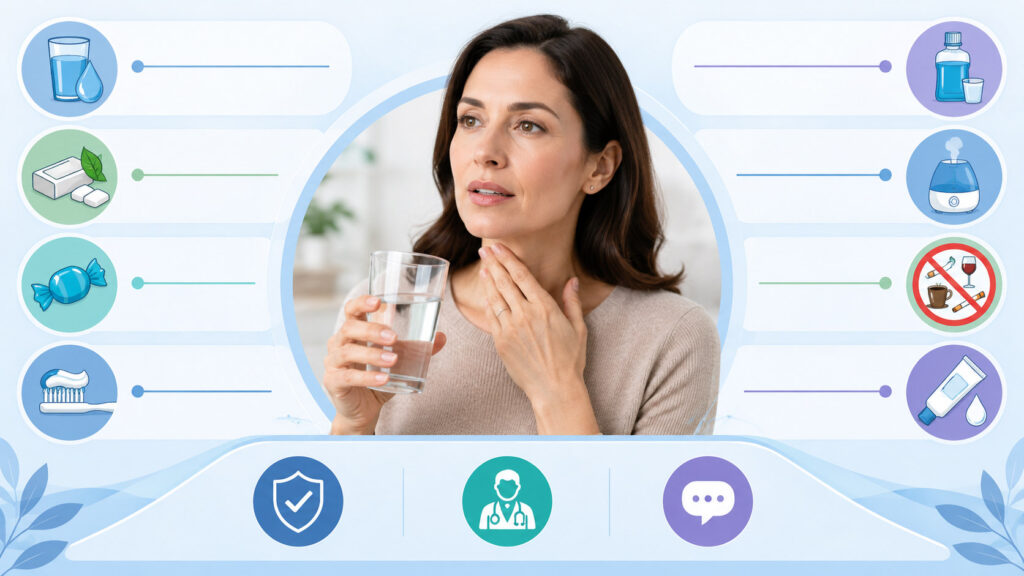
Several home-care steps can ease dryness and protect the teeth, though most provide temporary relief and work best when the salivary glands still produce some saliva.
- Sip water regularly to add moisture and make eating or speaking easier. Water may only help for a short time and does not fully replace saliva.
- Chew sugar-free gum to stimulate saliva. It may offer little benefit when the salivary glands have severe damage.
- Use sugar-free candy to ease a sticky feeling and encourage saliva. Avoid frequent acidic candy because it can irritate the mouth or affect enamel.
- Brush with fluoride toothpaste to protect enamel from decay. Some patients may need prescription-strength fluoride.
- Choose an alcohol-free rinse for added moisture without the sting of alcohol. Rinses do not replace brushing or dental care.
- Run a humidifier at night to reduce dryness caused by low indoor humidity. It will not address medication side effects or medical causes.
- Limit caffeine, alcohol, and tobacco because they can worsen dryness. Symptoms may continue when another cause is involved.
- Use a saliva substitute or moisturizing gel to coat dry tissues and improve comfort. These products work temporarily, and results vary.
Home care may control mild symptoms, but persistent dry mouth needs a closer look. Do not stop a medication or change its dose without speaking with the clinician who prescribed it.
Home care may control mild symptoms, but persistent dry mouth deserves a closer look. Do not stop a medication or change its dose without speaking with the clinician who prescribed it.
Complimentary New Patient Offer
Get Seen by a Dentist Today
Your initial exam and X-rays are complimentary. Call Gold Coast Dental or choose your nearest location and book an appointment online.
Products and Professional Treatments for Dry Mouth
Dry-mouth care depends on what is causing the problem, how severe the symptoms feel, and how well the salivary glands still work. Some products add moisture. Others stimulate saliva or help protect the teeth from decay.
The dentists at Gold Coast Dental have decades of experience caring for patients with dry mouth and related oral health concerns. They can examine your mouth, look for early signs of damage, review possible causes, and recommend care based on your symptoms and needs.
Saliva Substitutes and Oral Moisturizers
Saliva substitutes do not increase saliva production. They coat and moisten the mouth for temporary relief.
Common options include:
- Sprays
- Gels
- Rinses
- Lozenges
- Toothpastes made for dry mouth
Many products contain ingredients that help moisture stay on the oral tissues longer. Some also include xylitol, fluoride, calcium, or phosphate.
Saliva substitutes may make speaking, swallowing, and eating more comfortable, but the relief is temporary. No single product works best for everyone. Our team can help you compare options and choose one that fits your symptoms and routine.
Prescription Medicines That Stimulate Saliva
Prescription medicine may help when the salivary glands still have some function. Pilocarpine and cevimeline are two FDA-approved medicines used to stimulate saliva in certain patients.
These medicines are not right for everyone. Possible side effects may include:
- Sweating
- Nausea
- Diarrhea
- Increased urination
- Breathing problems
- Changes in vision
- Changes in heart rate or blood pressure
A Gold Coast Dental dentist can evaluate your mouth and discuss whether this type of treatment may be worth considering. Your physician will also need to review your health history and current medications before prescribing it.
Medication Review
Dry mouth may begin after starting a new medication or changing a dose. During your visit, our dentist can review your medication list and point out drugs that may be contributing to the problem.
Depending on your medical needs, the prescribing clinician may consider:
- A different medication
- A lower dose
- A different dosing schedule
- Dividing one larger dose into smaller doses
Never stop a prescription, lower the dose, or change when you take it without approval from the clinician who prescribed it. Gold Coast Dental can work with your physician or pharmacist when a medication review may help.
Extra Fluoride Protection
Ongoing dry mouth can allow cavities to develop more quickly, especially near the gum line or on exposed tooth roots. Our dentists may recommend added fluoride based on your cavity risk.
Options may include:
- Prescription-strength fluoride toothpaste or gel
- Fluoride varnish applied during a dental visit
- Fluoride used with custom trays
- A fluoride mouth rinse
Fluoride strengthens enamel and helps repair early mineral loss. It does not restore normal saliva production, so it may work best as one part of a broader dry-mouth care plan.
Treatment for Infections and Mouth Sores
Dry mouth can increase the risk of oral thrush, bacterial infections, cracked mouth corners, sores, and irritated tissues. A dental exam can help identify the problem and guide treatment.
Care may include:
- Antifungal medicine for oral thrush
- Treatment for inflamed or irritated tissues
- Care for mouth sores
- Adjustments for poorly fitting dentures
- Coordination with your physician when symptoms may have a medical cause
Treating an infection without managing the dryness may allow the problem to return. Care often works better when both issues are addressed together.
Dental Care and Monitoring
Regular dental visits can protect teeth and gums when saliva levels stay low. During an exam, the Gold Coast Dental team may check for:
- Early cavities
- Gum inflammation
- Enamel damage
- Mouth sores
- Signs of infection
- Changes around fillings, crowns, or other dental work
- Saliva beneath the tongue
- Swelling or tenderness in the major salivary glands
Some patients need more frequent dental cleanings, exams, fluoride treatments, or dental X-rays. The schedule depends on your symptoms, cavity risk, and oral health.
With over 20 Gold Coast Dental locations, it is easier to find care near home. Our friendly staff can help you manage discomfort, protect your teeth, and adjust your care as your needs change.
Treatment Options at a Glance
| Option | Main Purpose | What Patients Should Know |
|---|---|---|
| Saliva substitute | Adds temporary moisture | Does not restore natural saliva production |
| Moisturizing spray or gel | Coats dry tissues | May need to be reapplied often |
| Sugar-free gum or lozenge | Stimulates remaining gland function | Works only when the glands can still produce saliva |
| Prescription saliva stimulant | Increases saliva in some patients | Requires medical review and may cause side effects |
| Medication review | Looks for drugs that may contribute to dryness | Prescription changes must come from the prescribing clinician |
| Prescription fluoride | Protects teeth from rapid decay | Does not treat the cause of dry mouth |
| Antifungal or antibacterial treatment | Treats an oral infection | Requires an exam to identify the infection correctly |
| Denture adjustment or reline | Reduces rubbing and improves fit | Dry tissues may still need added moisture and monitoring |
No single treatment works for every person with dry mouth. The best plan often combines symptom relief, cavity prevention, treatment of any infection, and attention to the underlying cause.
When to Contact a Dentist or Physician
An occasional dry mouth may improve after drinking water, recovering from an illness, or changing a temporary habit. Dryness that continues, keeps returning, or affects daily life should be checked by a dental or medical professional.
The dentist can look for cavities, gum problems, mouth sores, infections, denture irritation, and other oral changes linked to low saliva. A physician may help identify medication side effects, dehydration, diabetes, autoimmune disease, or another medical cause.
Contact Gold Coast Dental When You Notice
- Dry mouth that lasts for several weeks
- New or frequent cavities
- Tooth sensitivity or pain
- Bleeding, swollen, or tender gums
- White patches, burning, or soreness in the mouth
- Cracked lips or sores that do not heal
- Persistent bad breath
- Dentures that suddenly feel loose or painful
- Trouble keeping the teeth and mouth clean
Dry mouth can allow tooth decay and infections to progress more quickly, so early care may prevent a smaller problem from becoming harder to treat.
💡Need new dentures? Our experienced denture specialists can help you find a comfortable, natural-looking fit.
Contact a Physician When Dry Mouth Comes With
- Strong or constant thirst
- Frequent urination
- Dry eyes
- Joint pain or swelling
- Trouble swallowing
- Unexplained weight loss
- Ongoing fatigue
- Fever or signs of dehydration
- Symptoms that began after a new medication or dose change
Dry eyes and dry mouth together may occur with Sjogren’s disease or another autoimmune condition, but only a medical evaluation can identify the cause.
Seek Prompt Care for Serious Symptoms
Get prompt medical or emergency dental care for:
- Swelling in the face, jaw, or neck
- Trouble breathing or swallowing
- Severe mouth or tooth pain
- Fever with facial swelling
- Pus, drainage, or a bad taste from an infected area
- Signs of severe dehydration, such as confusion, fainting, or very little urination
These symptoms may point to an infection or another problem that needs care quickly.
Some patients may need both dental and medical care. A dentist can address oral damage and discomfort, while a physician can investigate health conditions or medication effects that may be causing the dryness.
Managing Dry Mouth With the Right Support
Dry mouth may start as a small discomfort, but ongoing symptoms can affect eating, speaking, sleeping, and dental health. The right response depends on the cause. Some people improve with better hydration or changes to daily habits, while others need medication review, added fluoride, treatment for an infection, or care for an underlying health condition.
A dentist can check for early cavities, gum irritation, mouth sores, denture problems, and other signs that low saliva is affecting the mouth. Medical care may also be needed when dryness appears with strong thirst, frequent urination, dry eyes, joint pain, fatigue, or symptoms that began after a medication change.
Gold Coast Dental helps patients protect their teeth and gums when dry mouth becomes frequent or uncomfortable. A dental exam can identify damage early and guide preventive care. We can help determine when a physician or pharmacist should also be involved.
📞 Schedule an appointment with Gold Coast Dental today.
Complimentary New Patient Offer
Get Seen by a Dentist Today
Your initial exam and X-rays are complimentary. Call Gold Coast Dental or choose your nearest location and schedule an appointment online.